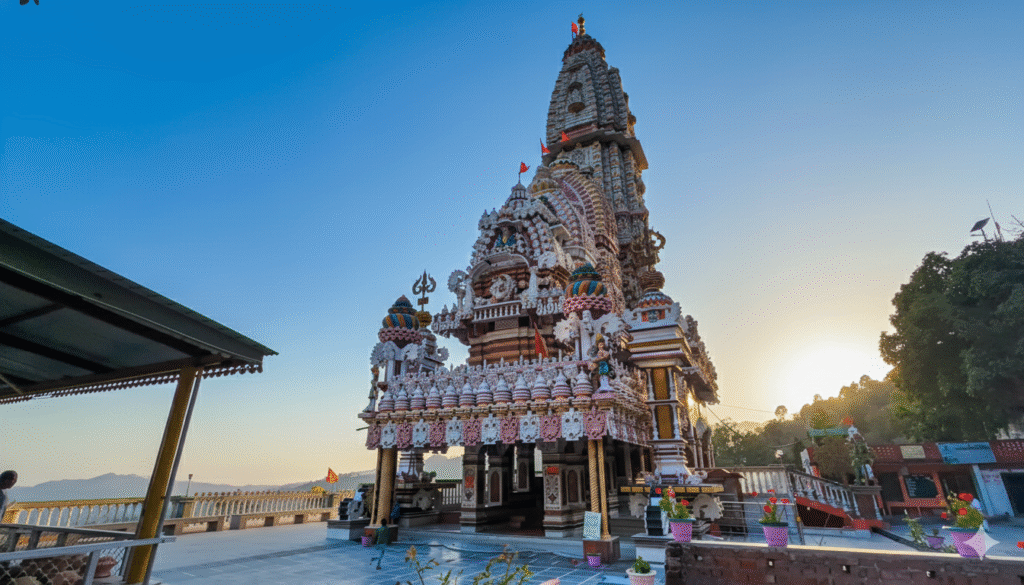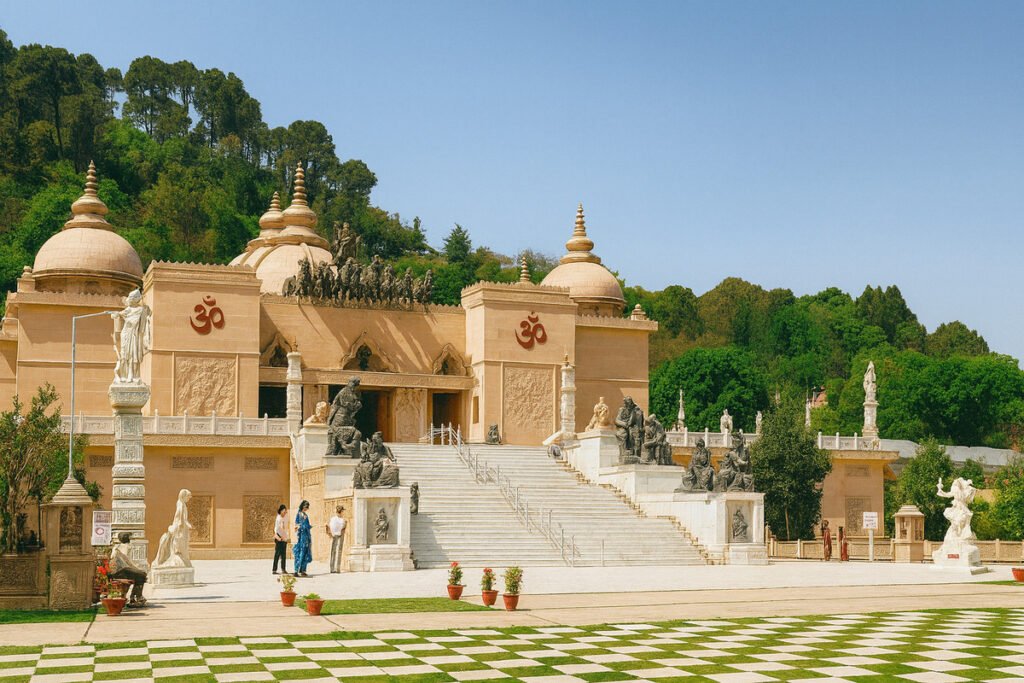
Intoduction About Kali Tibba Temple – Hills, Silence and the Sacred Place of Maa Kali
After a point, city life turns only into running and rushing.
When between traffic, noise, deadlines, and concrete buildings the space to breathe starts becoming less, the mind automatically starts getting pulled towards the mountains. One such place is Kali Tibba Temple of Himachal Pradesh, which is located on a high hill near Chail.
This temple is not for those people who do only checklist tourism.
This place is for those who want to feel peace, nature, and spirituality together.
Kali Tibba Temple – Name, Place and First Experience
The name “Kali Tibba” itself tells a lot.
“Tibba” means a high peak or hill, and “Kali” represents Maa Kali here. As soon as you reach near Chail and slowly move ahead between the mountains, all the sounds of the city start getting left behind.
As soon as the plains end, green mountains, blue sky, and pine–deodar forests welcome you. From here the journey does not remain only travel, rather it becomes an inner journey.
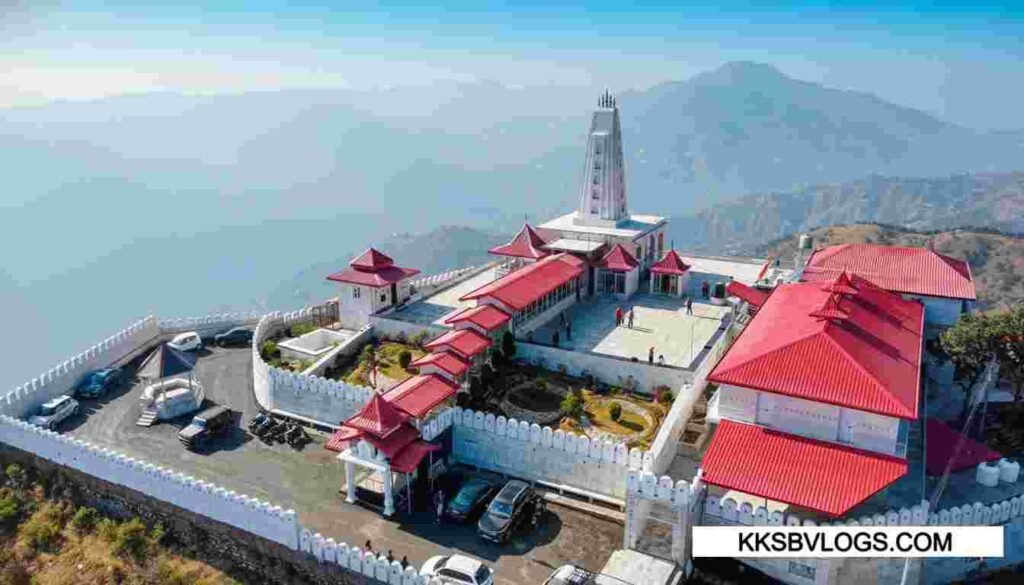
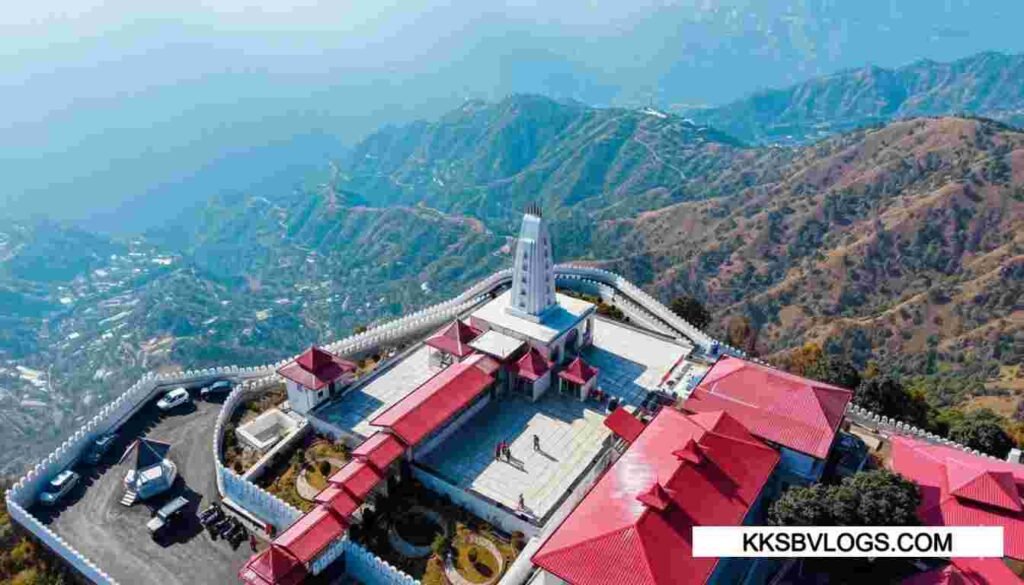
Kali Tibba Temple starts appearing from a distance itself on a high peak. The white-colored temple in the middle of the forest has a completely different presence — as if some silent protector is watching the entire valley.
History of Kali Tibba Temple – A Journey of Stories and Beliefs
The history of Kali Tibba Temple is not limited to a single written record. Its story is connected with local beliefs, stories passed from generation to generation, and development that happened with time.
Local Story Connected with the 9th Century
According to local people, worship of Maa Kali has been happening on this hill from a very long time. One famous local story says that around the 9th century, a king of Himachal got darshan of Maa Kali in a dream and she gave a sign to build a place for her worship at this site.
There is no solid historical proof of this story, but this belief is still deeply settled in people’s minds even today. Because of this, a small place of worship already existed here, which slowly started being recognized as a sacred place.
Contribution of the King of Patiala in the 19th Century
Another story is connected with the 19th century, in which it is said that the King of Patiala played an important role in the development of this temple. It is believed that the planning and funding of the temple were done secretly, so that no dispute or tension could arise between different religious groups.
At that time, this place was known as Sidh Temple. Slowly, this place came forward as an influential and well-respected place of worship.
Symbol of Shakti
With time, Kali Tibba Temple became a symbol of the power and protection of Maa Kali. Even though it is not officially included in the list of 51 Shakti Peeths, for devotees its importance is considered no less than any Shakti place.
People who come here believe that the presence of Maa Kali can still be felt on this hill — especially when there is complete silence around the temple and the air is also flowing gently.
Pujari Shambhu Bharti and the Present Form of the Temple
The present form of Kali Tibba Temple that we see today, its major credit is given to Pujari Shambhu Bharti. He not only organized the worship system of the temple, but also helped in giving this entire place the form of a proper temple complex.
With his efforts:
- a boundary wall was built around the temple
- a steep road was prepared for people so that reaching becomes easy
- and a kund / small pond was built where devotees can take a bath
All these works turned Kali Tibba not only into a place of worship, but also into a well-managed spiritual destination.
Today, every year thousands of devotees and pilgrims reach here, and the temple is highly appreciated for its discipline, cleanliness, and adaptive design.
Temple Environment and First Darshan
Because Kali Tibba Temple is located on a high hill, the atmosphere here feels completely different. Dense pine and deodar trees around the temple, valleys spread below, and mountains visible far away — all this together creates such a peace which is difficult to find in cities.
The entrance and boundary walls of the temple are made of white marble. As you move inside, a strange calm is felt — as if noise automatically stays behind.
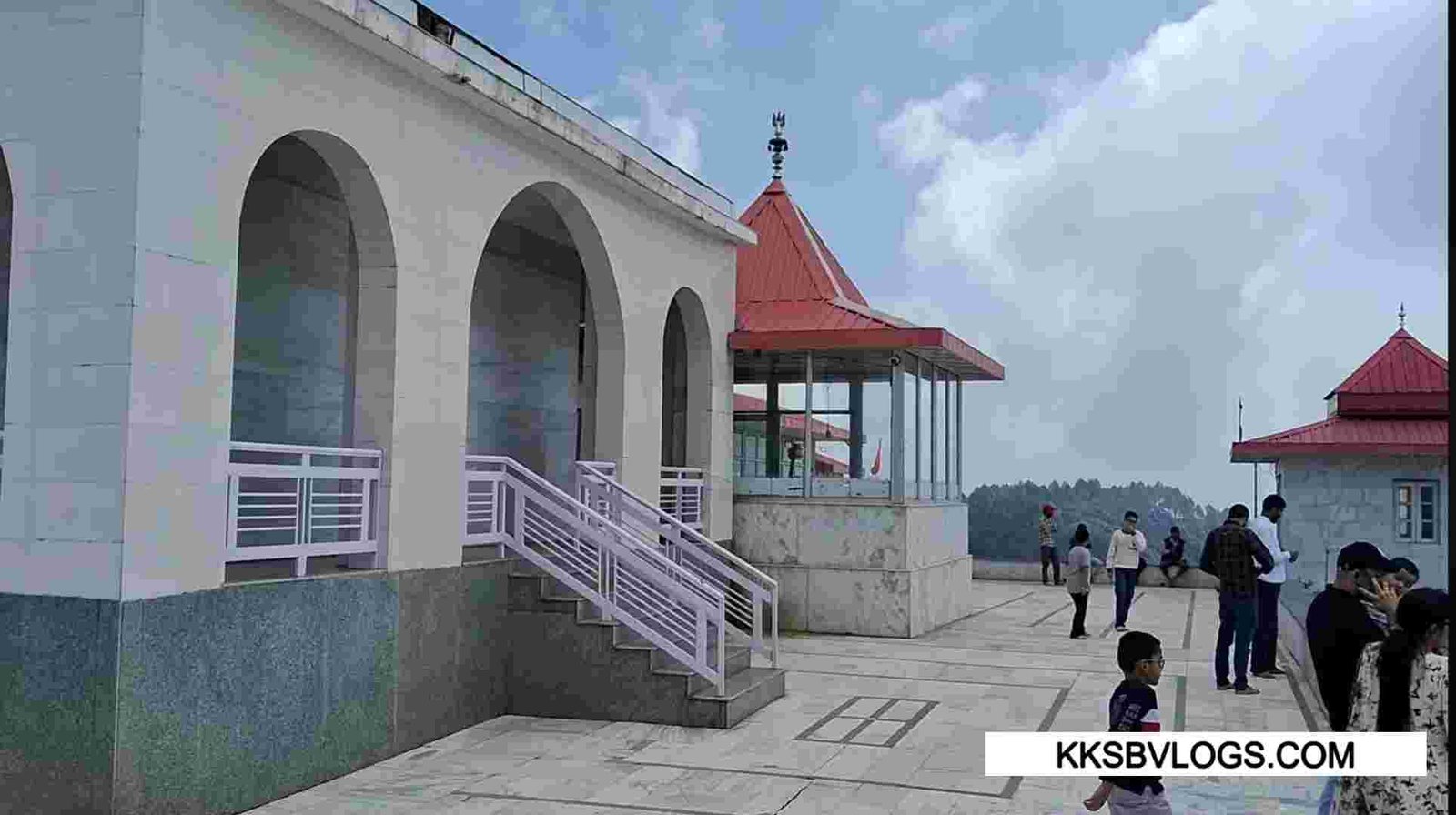
Journey to Kali Tibba Temple – Route and Our Real Experience
Reaching Kali Tibba Temple itself is a journey experience. As you move ahead from Chail, the road slowly becomes narrow, and the last sign of the city also gets left behind. From here only mountains, forest, and silence stay with you.
While going by vehicle, the last few kilometers of the road can be slightly steep, but it is manageable. Most people park their vehicle at the last parking point, from where the peak of the temple starts appearing clearly.
The white temple that is visible on a high hill from a distance is Kali Tibba Temple — and that moment is the moment when you feel that the journey was worth it.
Trek or Direct Road – Which Option Is Better?
To reach here, you have both options, and both have their own charm.
Trekking Option
If you are fond of trekking or walking, then from the last parking point you can reach the temple by doing a trek of around 1–1.5 km. This trek:
- is not very difficult
- passes through pine and deodar forests
- and gives a new view at every turn
For nature lovers, this option feels more satisfying.
Road Option
If you are with elderly people, or you want to avoid walking, then you can take your vehicle quite close to the temple. The road is a little steep, but with proper driving there is no problem.
To be honest, both options are safe and practical — you just need to take care of the weather.
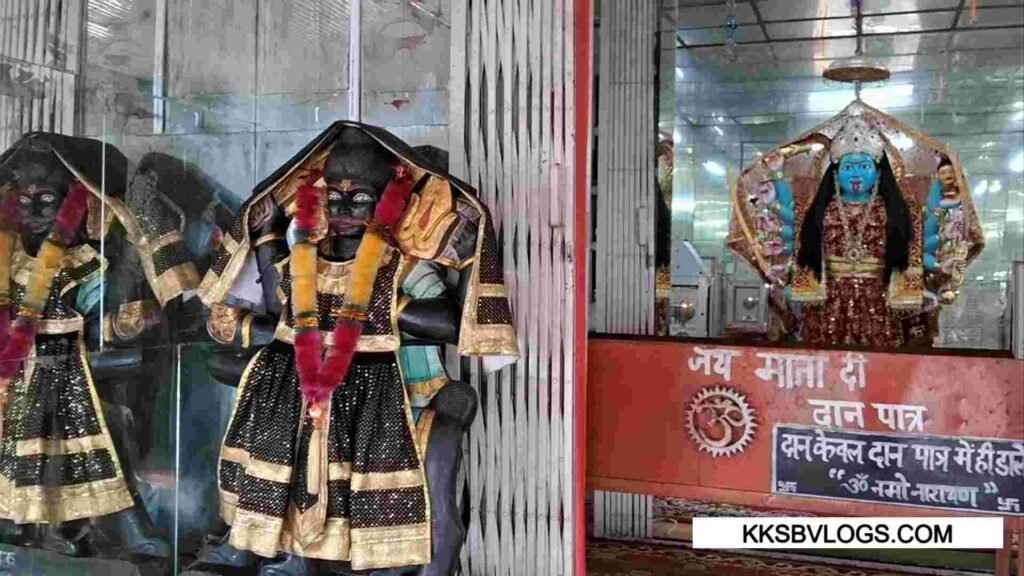
Inside the Temple – Darshan and Worship Place
As soon as you go inside the temple, one thing becomes clear — this place is not made for noise. Here people talk in a low voice, and most people remain quiet within themselves.
This temple is dedicated to Maa Kali (Mahakali). Earlier, worship of Maa Kali was done here in the form of a pindi, and later the temple was constructed. Even today, the original feeling of this place remains the same.
In the temple complex, you can:
- visit Shri Ganesh Temple
- visit Panchmukhi Hanuman Temple
- and also have darshan of several Shivlings
The idols of Hanuman and Ganesh are often seen in saffron color, which gives a different kind of energy to the entire complex.
View Point and the View of Shivalik Range From Kali Tibba Temple
One of the biggest highlights of Kali Tibba Temple is its view point. When you stand near the temple and look down, then:
- mountains spread far and wide
- deep valleys
- and in clear weather, the peaks of the Shivalik range are visible
This place is not only for photos, but is perfect for standing quietly and watching. After coming here, people often stay for a longer time — without saying anything.
Mountain Weather – Everything Changes in One Moment
At Kali Tibba, the weather is the owner of its own will.
One moment there is sunlight, and the very next moment:
- dark clouds surround
- strong winds start blowing
- sometimes rain or hailstorm also happens
In such moments, this place feels even more powerful, but at the same time it reminds that nature should not be underestimated.
So while coming here:
- keep a light jacket or warm layer
- take extra caution in the rainy season
- do not stand for long in open areas

Best Time to Visit Kali Tibba Temple
If seen according to experience:
- March to June: Best time
Weather remains pleasant and views are clear - July to September: Better to avoid
Risk of fog, rain, and slippery roads - October to February: Beautiful but cold
Sometimes snowfall can also be seen
If you want to see sunset, then evening time is best — just make sure to leave before it gets dark.
Things to Remember Before Visiting Kali Tibba
- Avoid loud music and unnecessary noise
- It is a jungle area — do not litter at all
- Plan only after checking the weather
- Avoid staying for long after evening
- Respect local people and temple rules
Kali Tibba Temple – Is This Place for You?
If you:
- want to stay away from crowds
- want to feel nature and spirituality together
- and want to explore a quiet, offbeat, and meaningful place of Himachal
then Kali Tibba Temple will not disappoint you.
This place is not only for photos or reels, but is made for meeting yourself.
Places Near Kali Tibba Temple, Chail
- Stone Temple – A quiet and lesser-known temple in Chail. Locals believe the place came into existence after a man repeatedly saw its location in a dream, which is why it still holds special importance among villagers.
- Chail Cricket Ground – Famous for being the highest cricket ground in the world, this place is surrounded by forests and offers calm views along with a bit of history.
- Thada Muda Temple – An offbeat temple connected to local beliefs, usually visited by people who prefer quiet and less crowded spiritual places.
- Chail – A peaceful hill town known for its slow pace, fresh air, and natural surroundings, making it ideal for a relaxed visit.
- Kandaghat – A small but important town on the Kalka–Shimla route, commonly used as the main access point for reaching Chail.
FAQs about Kali Tibba Temple
Where is Kali Tibba Temple located in Himachal Pradesh?
Kali Tibba Temple is located near Chail in the Solan district of Himachal Pradesh. It sits on a high hilltop, surrounded by pine and deodar forests. Because of its location, the place feels quiet and slightly disconnected from city life.
Why is Kali Tibba Temple famous?
Kali Tibba Temple is famous for its peaceful environment, hilltop location, and spiritual atmosphere. Unlike crowded tourist spots, this temple is known more for silence, mountain views, and a strong sense of calm rather than grand architecture.
What does “Kali Tibba” mean?
The name comes from two words — “Kali,” referring to Maa Kali, and “Tibba,” which means a high hill or peak. The temple’s position on top of a hill makes the name feel very fitting once you reach there.
Is Kali Tibba Temple an ancient temple?
There is no single written historical record, but local beliefs suggest that worship has been happening here for centuries. One popular story connects the place to the 9th century, when a king is believed to have received guidance in a dream to worship Maa Kali at this spot.
Who developed the present structure of Kali Tibba Temple?
The current form of the temple is largely credited to Pujari Shambhu Bharti. He helped organize temple worship, improve access roads, build boundary walls, and create a small kund, making the site more accessible and well managed.
Is there a trekking option to reach Kali Tibba Temple?
Yes. From the last parking point, visitors can trek around 1 to 1.5 km to reach Kali Tibba Temple. The trek is not very difficult and passes through forested paths, which many visitors actually enjoy more than driving.
What can visitors see inside Kali Tibba Temple complex?
Apart from Maa Kali, the temple complex also has shrines dedicated to Shri Ganesh, Panchmukhi Hanuman, and several Shivlings. The overall environment inside remains calm, and visitors usually maintain silence naturally.
What is the best time to visit Kali Tibba Temple?
March to June is considered the best time to visit due to pleasant weather and clear views. July to September is usually avoided because of rain and fog, while October to February offers beautiful scenery but colder temperatures.
Final Words
Kali Tibba Temple is a reminder that everything in the mountains is not dramatic.
Some places are just silent, and that silence itself is their biggest beauty.
If you are ever around Chail, then do not consider this place just a stop —
give some time, stay quiet, and feel it.