
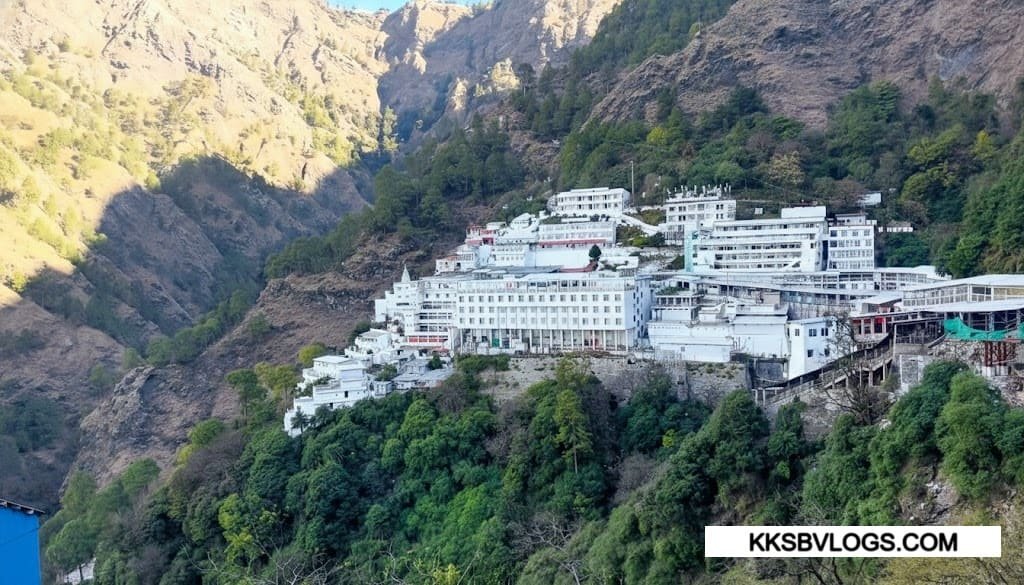
Vaishno Devi Yatra: Faith, Journey and the Feelings That Grow Slowly on the Way
Some journeys are planned in advance, and some just happen because the heart says,
“Let’s go there this time.”
Vaishno Devi is one of those journeys.
Some people go after a wish is fulfilled, some during a tough phase of life, and some simply to feel the peace of Maa’s darbar.
But it’s hard to find anyone who says that this journey did not touch them from within.
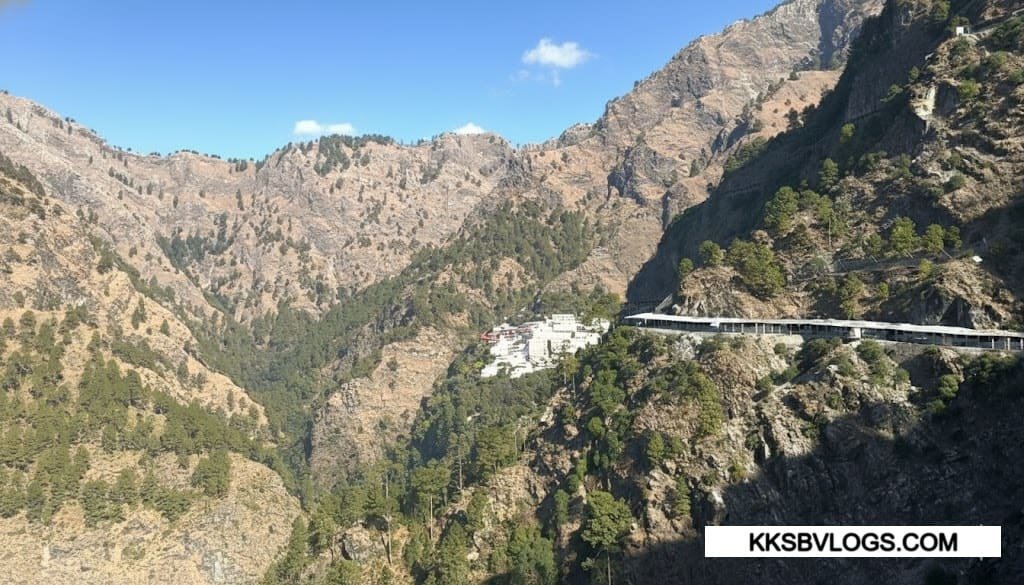
This sacred shrine nestled in the mountains is as emotionally powerful as it is religiously important. And to be honest, the beauty of Vaishno Devi is not in its buildings or decoration —
it lies in that vibe which slowly settles in your heart as you climb the path.
Where Is Vaishno Devi? And Why Does This Journey Start from Katra?
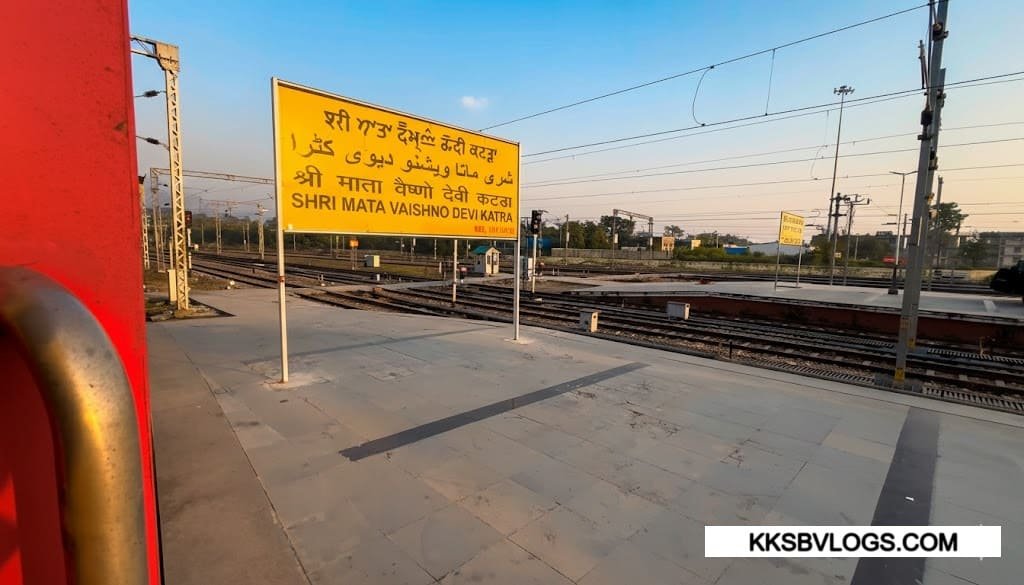
The journey starts from a small but extremely lively town called Katra.
The town may be small, but lakhs of devotees visit here throughout the year, so its streets are always full of movement.
Katra has its own charm —
- Roads that are small but clean
- Shops everywhere selling pooja items
- The aroma of hot milk
- And that shine of faith on people’s faces whose journey is just about to begin
From Katra to Bhawan, the total distance is around 12–13 km.
This is the trekking route that people call “Yatra”.
This is where the real experience begins — the same climbs, the same slopes, clouds appearing in between, and those chants that give you energy even when you’re tired.
What Is the Importance of This Yatra? Why Do People Come Here Again and Again?
Vaishno Devi is not just a pilgrimage — it is an emotion.
People associate it with “Maa ke bulawe” — meaning, when the Mother calls, only then do you get darshan.
Maybe it’s an emotional way to look at it, but if you ask any devotee, their answer is usually:
“We came only when Maa called us.”
It is not just a trek — it is a form of spiritual cleansing.
The cold mountain breeze, help from strangers along the way, the echo of “Jai Mata Di”, and the grand Bhawan at the top — together they create a unique combination.
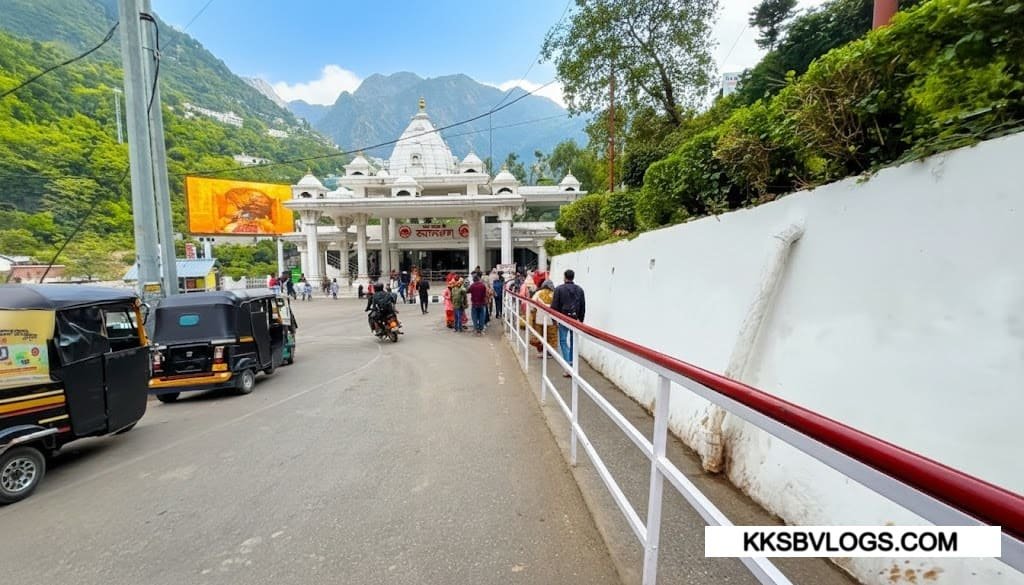
How to Reach Jammu?
The first major point you have to reach is Jammu.
This city is the first big halt of this yatra.
Train
Now there are many trains directly to Katra Railway Station, so it has become quite easy for rail travellers.
Flight
If you are coming by flight, then Jammu Airport is the nearest.
From there, taxis to Katra are easily available.
Road
The road from Jammu to Katra is surprisingly smooth —
around one hour of travel, and in between you get a few glimpses of the Chenab valley.
From Where Does the Yatra Actually Start? Banganga — The First Step of the Journey Vaishno Devi
In Katra, after taking your RFID card, the journey begins from the Banganga Gate.
This is where the climb starts, and this is where many people mentally shift their mindset —
“Let’s leave everything else for later, now the only goal is to reach Maa.”
The water of Banganga is cold, and many people wash their hands and face here and then start the yatra.
It’s a kind of mental reset —
like making yourself feel lighter before a long journey.
The Path: Climb, Chants, Tea Stalls and People’s Energy
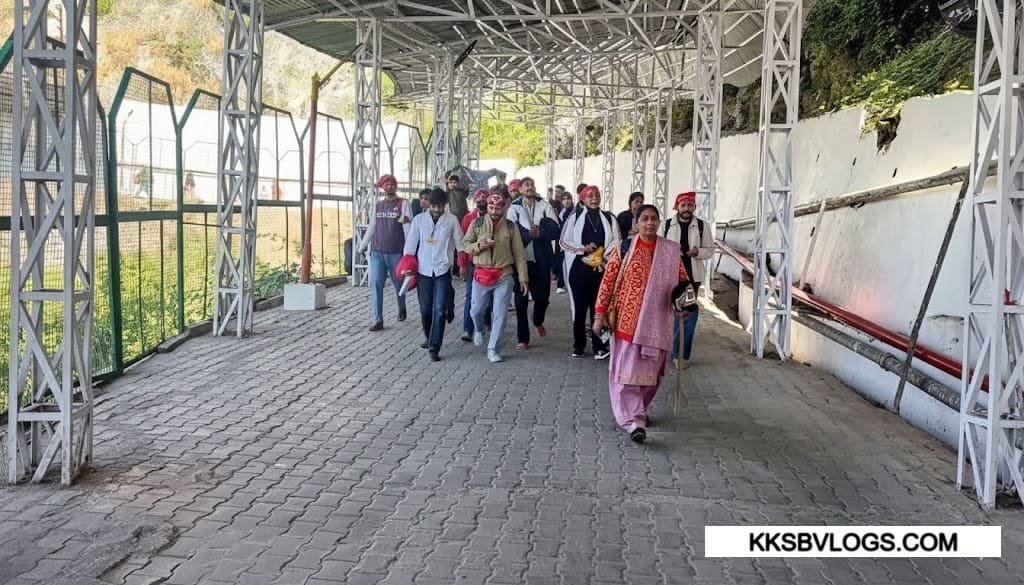
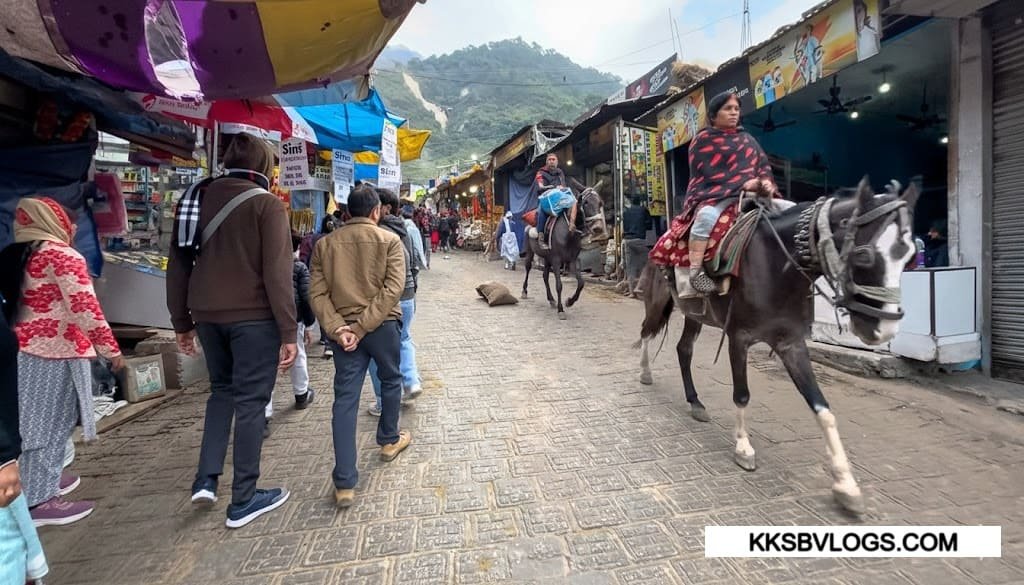
The yatra route is divided into old and new tracks.
The new route is smoother and most people now take it because the slope is gentler and the crowd gets divided.
What do you find on the way?
- The aroma of hot tea
- Small food stalls
- Voices of “Jai Mata Di” “Jai Maa Vaishno Devi“
- People walking with a smile even when they’re tired
- The helpful presence of police and volunteers
- And most importantly — that vibe which says,
“Come on, just a little more climb is left.”
If you have ever done the Yatra at night, you’ll know how the lights on the route and the mountain breeze together create a strange sense of peace.
Adhkuwari: Halfway Point of the Journey and a Special Temple
Adhkuwari is the place where people often take a longer rest because from here the route to Bhawan becomes more manageable.
Apart from that, the Garbhjoon Cave here is considered very important.
For many travellers, this becomes the real spiritual highlight of the yatra —
but yes, sometimes the queue gets very long, so some people take a practical call and move ahead.
Mountains, Weather and Those Feelings That Cannot Be Captured in Any Photo
One of the special things about Vaishno Devi is how the weather can suddenly change as you climb higher.
Sometimes clouds descend to your feet, sometimes the wind becomes strong, and sometimes it feels like the sky is very close.
This mix is what turns it into more than just a pilgrimage — it becomes an emotional journey.
Many people say —
“Tears just come on their own when you reach Bhawan.”
This is not some miracle but the accumulated emotion of every step you took on the way.
Vaishno Devi Yatra Route, Facilities, Helicopter Truth, Adhkuwari Experience and the Complete System at Bhawan
The real charm of Vaishno Devi is not only in the Bhawan, but in the route that starts from Katra and slowly climbs up through the mountains.
You can’t capture that vibe in any photo — this path is something you have to feel.
Now in this PART, we will practically understand:
- How the entire route works
- Which track is easier
- Which facility suits whom
- What actually happens at Adhkuwari
- And what you really have to do after reaching the Bhawan
Trek Route from Banganga to Bhawan — What Is It Really Like?
The yatra starts from Banganga Gate, which is in Katra.
The first 2–2.5 km have a bit more slope, so most people set their walking rhythm here.
What is the vibe on the route like?
- The smell of chai
- “Jai Mata Di” from fellow travellers
- Small bhandaras in between
- Lines of people walking who somehow give courage to each other without even talking
- Light cold breeze on the path that actually reduces fatigue
The Old Track is used less now because it is a bit steeper.
The New Track is smooth, clean and family-friendly.
New Track vs Old Track — Which One Is Better? (Honest Comparison)
✔ New Track (Most Recommended)
- Gentler slope
- Clean and smooth route
- No ponies (noise-free, peaceful)
- Perfect for elder travellers
- Battery car also runs on this route
✔ Old Track
- Slightly steeper
- More crowd
- Ponies run on this route
- More shops along the way
If you are with family, kids or elderly, choose the New Track.
If you are solo and want a bit of challenge, the Old Track is also fine.
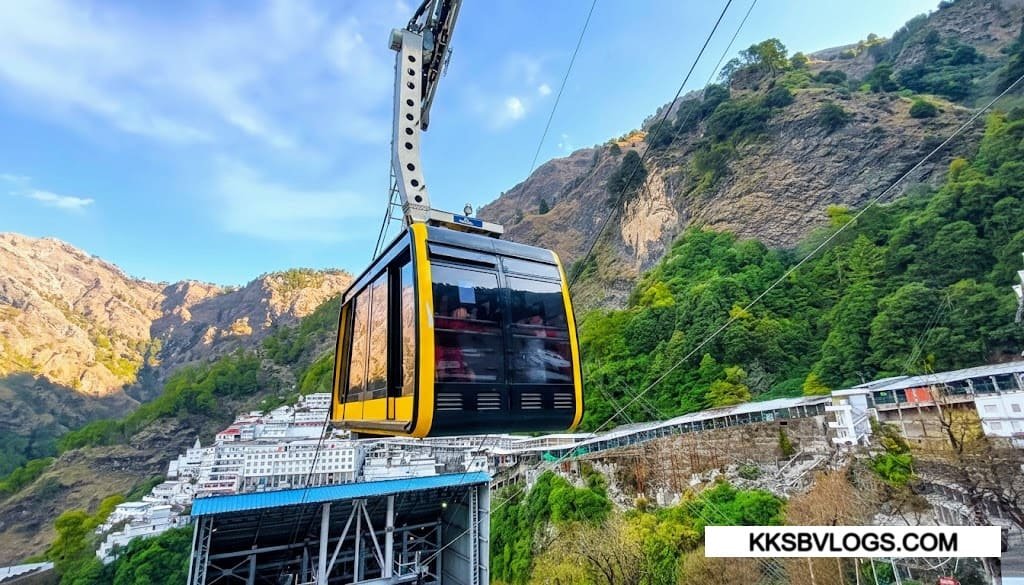
Battery Car — Who Gets It, When It Runs, What’s the Truth?
Battery cars take people till Himkoti or Sanjhi Chhat, but here’s something very few people tell you:
- Seats are very limited
- On long weekends, sometimes you don’t even get a chance to stand in the ticket line
Battery Car Is Useful For:
- Senior citizens
- Small kids
- People with health issues
- Late-night travellers
The ticket counter is near the new track, and at night the service is very limited.
So don’t treat it as a “guaranteed facility” — you need a bit of luck as well.
Ponies and Palki — Practical Help or Just a Hassle?
If you’ve ever been on a crowded day in Vaishno Devi and heard the pony traffic, you know how chaotic it can get.
Ponies run on the Old Track and are a big help for physically unfit travellers. Just keep in mind:
- Pony rates change based on season
- Don’t bargain randomly — follow the fixed government rates
- Pony riders walk very fast — if you don’t like heights, better avoid
Palki is a blessing for the elderly — but it is more costly and availability is low.
Adhkuwari Cave — Sounds Simple, but the Real Experience Is Very Different
Adhkuwari is the psychological halfway point of the journey.
You feel a different kind of energy here — maybe because people take a longer break.
Cave Experience
The Garbhjoon Cave is the spot many people want to visit for sure, but the truth is:
- In peak season, waiting can go on for hours
- The queue moves slowly
- There is very little space inside
A lot of people simply take Prasad and move on, because the full cave experience is not always practically possible time-wise.
Sanjhi Chhat — The Place Where You Feel “Now It’s Not Too Far”
After reaching Sanjhi Chhat, Bhawan doesn’t feel too far anymore.
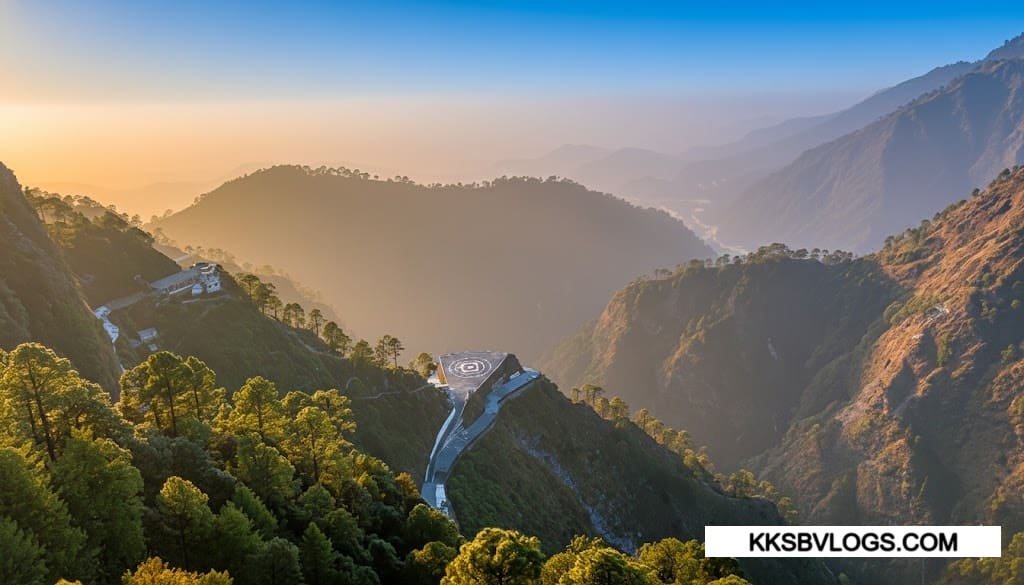
This is also where the helicopter landing point is, so activity is a bit higher here.
At this height, the wind becomes quite cold — suddenly you remember your jacket.
But this very mountain air is what makes the yatra memorable.
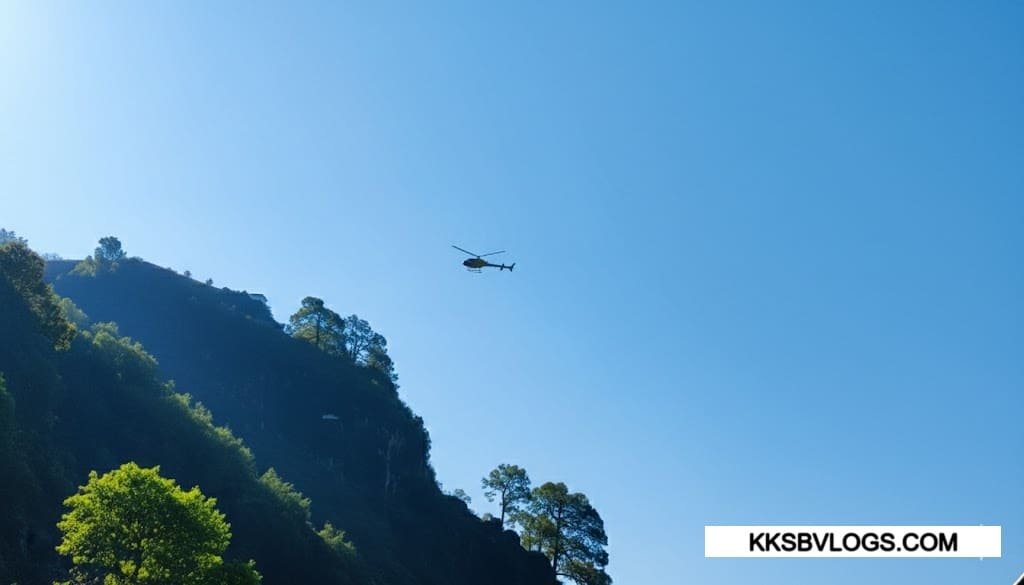
The Truth About Helicopter Booking — Why Doesn’t Everyone Get a Seat?
The helicopter runs Katra → Sanjhi Chhat, and it sounds very royal —
but in reality, it’s not that simple.
Ground Reality
- Tickets get sold out in 4–5 minutes
- Many people get stuck with agents (avoid this!)
- Cancellations are common due to weather
Tips That Actually Help:
- Use only the official Shrine Board website
- Forget booking if you’re on a slow internet connection
- Chances are better on weekdays
- Try booking at 1–2 AM at night (server load is lower)
If you think, “We’ll definitely get seats” —
that misunderstanding usually breaks fast.
So if you don’t get a booking, don’t stress —
the trek is the best part anyway.
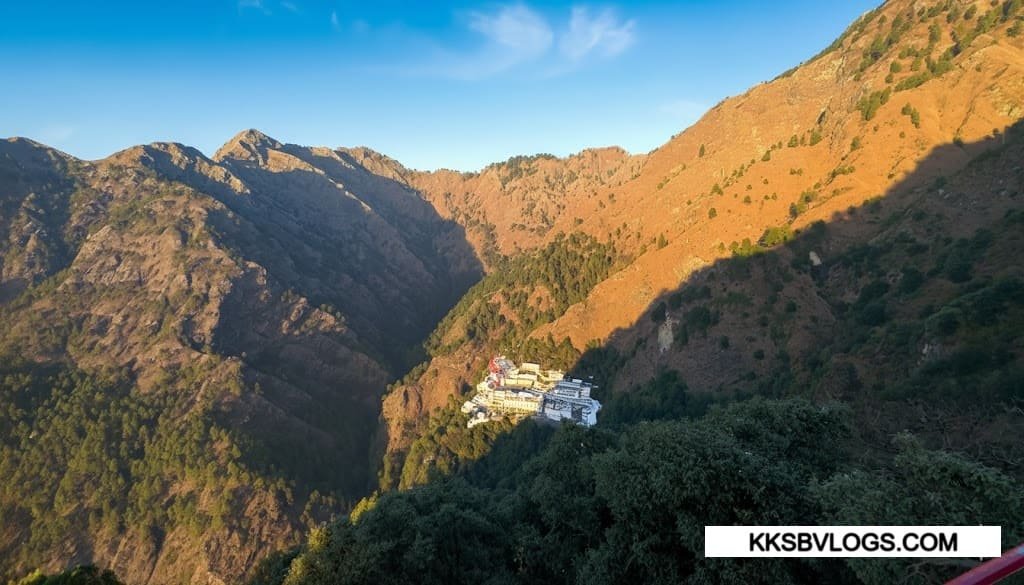
What Do You Have to Do After Reaching Bhawan?
This is the part most people don’t think through, and then they get confused once they reach.
✔ 1) Mobile Deposit & Locker
No camera or mobile is allowed inside the Bhawan.
The locker counters are very systematic — you just need to stay patient in the crowd.
✔ 2) Clothes Changing Room
If you reached in snowfall or very cold wind, this room is very useful.
✔ 3) RFID Verification
This is mandatory — only then you get entry.
✔ 4) Darshan Queue
This depends on the season:
- Sometimes darshan in 20 minutes
- Sometimes it can take up to 2 hours
The atmosphere is intensely spiritual —
people in the line are surprisingly calm.
✔ 5) Prasad
The Prasad here is simple but special —
one of those permanent memory type experiences.
Aarti Experience in Vaishno Devi — Don’t Miss It If You Get a Chance
Both morning and evening Aarti are very powerful in Vaishno Devi Temple.
But keep in mind:
- During Aarti, regular entry stops
- Security becomes very tight
- Seats are limited
People who attend the Aarti often call it the best moment of their yatra.
The chanting here and the vibration of the bells truly sink into your heart.
Best Time to Visit, Weather, Budget, Mistakes to Avoid, Itineraries, FAQs & Final Tips
The Vaishno Devi yatra is not just about “When should I go?” —
it also depends on weather, crowd, your health, distance and your walking pace.
Many people come without any planning and then get troubled due to the crowd or weather.
That’s why in this PART I’m sharing things that most travel videos or generic blogs never tell you clearly.
1) Best Time to Visit Vaishno Devi — Considering Both Weather and Crowd
✔ 1) March–June (Most Comfortable Months)
- Temperature stays normal
- Nights are moderately cold
- Best time for families and senior citizens
✔ 2) July–September (Rainy Season — Mixed Experience)
- Rain can start anytime and the track becomes slippery
- Helicopter cancellations are very common
- But the crowd is less, which is an advantage
✔ 3) October–December (Festive + Chilly Weather)
- During Sharad Navratri, the crowd becomes crazy — if crowds bother you, avoid this time
- In November–December, the climb can feel a bit tough but the weather is very pleasant
✔ 4) January–February (Coldest, but Magical)
- Snowfall happens around Bhawan and upper areas
- Crowd is less but cold is intense
- Perfect adventure vibe for young travellers
2) What Should You Carry In Vaishno Devi Yatra? (Practical Packing List That Actually Helps)
This is the section that helps people the most —
because a small mistake on the route can turn into a big problem.
Carry:
- A light jacket (mountain wind can suddenly turn cold)
- Raincoat/Poncho (for monsoon or sudden drizzle)
- Comfortable shoes (forget slippers)
- A water bottle
- A small power bank
- Glucose powder or energy toffees
- Pain-relief spray like Volini for your legs
- Woollen cap for kids
- Small back support belt for senior citizens
All of this fits easily in one backpack — don’t overpack.
3) Vaishno Devi Yatra Budget (An Honest Overview)
Everyone’s cost will be different, but here’s an average breakdown:
Transport (Till Jammu/Katra)
- Bus/shared taxi: ₹150–₹300
- Private taxi: ₹1000–₹1500
Stay (In Katra or Nearby)
- Budget hotels: ₹600–₹1000
- Mid-range: ₹1200–₹2000
- Shrine Board rooms (if available): Affordable & reliable
(Example: Trikuta Bhavan)
Food
Food in Katra is decently priced:
- Around ₹150–₹300 per meal
- Bhojanalayas near Bhawan are cheap + clean
Ponies / Palki / Battery Car (Optional)
- Battery car: ₹300–₹400 (one side)
- Pony: ₹800–₹1500 depending on route
- Palki: ₹2500–₹4000 approx
Helicopter
- Round trip approx ₹3500–₹4500
(one-way is also possible)
Total Average Spending:
- Budget traveller: ₹1000–₹1500/day
- Normal traveller: ₹1500–₹2500/day
- If you want helicopter, then add extra on top of this.
4) Avoid These Mistakes In Vaishno Devi (Most People Make Them)
This is the most important SEO-friendly section because people search:
“vaishno devi mistakes”, “what to avoid in vaishno devi”, “vaishno devi travel tips”
Starting the climb at night without a jacket
The air at higher altitude is thin and cold — many people literally freeze.
Forgetting to deposit phone before going towards Bhawan
You are sent back from the entry gate if you forget.
Drinking too little water
It’s a long trek; dehydration is common.
Waiting for hours in Adhkuwari
In peak season, it can take 2–3 hours or more.
Depending only on helicopter
Many flights get cancelled due to weather.
Wearing the wrong footwear
This is a stairs + incline trek. You don’t need fashion, you need support.
5) 1-Day & 2-Day Itinerary (Practical and Crowd-Friendly)
1-Day Itinerary (If You Have Less Time)
Morning:
- Start early morning trek from Katra
- Take a short break at Adhkuwari
- Reach Bhawan and have darshan
- Eat at bhandara/bhojanalaya
Evening:
- Trek back from Bhawan
- Rest at Katra
This itinerary is tough but doable.
2-Day Itinerary (Most Comfortable)
Day 1:
- Reach Katra
- Get your RFID card made
- Take a short rest
- Light evening walk (market, food)
Day 2:
- Early morning trek
- Adhkuwari → Sanjhi Chhat
- Darshan at Bhawan
- Langar/Bhojanalaya
- Return by evening
This itinerary is best for families and elderly travellers.
6) Nearby Places From Vaishno Devi After Yatra
1) Shiv Khori Cave Temple
Shiv Khori Temple
An amazing cave, deep spiritual vibe and a completely different experience.
2) Patnitop
Patnitop Hill Station
Snowfall, adventure, paragliding — a perfect cool-down destination after the yatra.
3) Sanasar Lake
Sanasar Lake View
Calm, scenic, photo-friendly spot — very relaxing.
“Found this blog informative?
Drop your thoughts in the comments.
Follow @official_kksb and subscribe to KKSB Vlogs on YouTube for more.”
How long does it actually take to walk up to Vaishno Devi?
There is no exact science here. Some people climb in 4–5 hours, some take 7–8 hours.
Sometimes you stop for chai, sometimes you sit somewhere for a bit… time just passes.
Best is to walk comfortably — don’t stress by watching the clock.
Is it safe to climb at night or does it feel risky?
Most people say the night trek is surprisingly peaceful.
There are lights everywhere, security is visible all along the route, and the crowd is also less.
If you don’t like the daytime heat, you’ll probably enjoy the night time more.
Is it difficult to find rooms in Katra on crowded days?
On normal days, you get rooms easily.
But during festivals or Navratri, Katra literally gets full.
At that time, randomly walking in and asking hotels can get difficult.
If you get Shrine Board accommodation, your tension is over.
What’s the real story of helicopter booking? Be honest.
The truth?
If you get it, it’s a bonus. If you don’t, it’s not a surprise.
Tickets vanish in minutes.
People with fast internet and perfect timing are usually the lucky ones.
Some people try 3–3 times before they finally get a ticket.
So go with a trekking mindset.
Is there enough time to go inside the Adhkuwari cave or does it take too long?
On crowded days, honestly, the waiting can get very long.
Sometimes people stand in line for 1–2 hours and then decide,
“Let’s go to Bhawan first.”
On normal days it is more peaceful, but there is no guarantee.
Can small kids manage the trek or is it too hard?
Kids’ mood can flip anytime.
Some kids walk the whole way surprisingly well, and some start demanding to be carried after just 2 km.
Best is to carry snacks, water and a light jacket for them.
And forget the idea of a stroller — this route is not stroller-friendly.
Is the trek possible for people with knee problems?
It is possible, but at a slow pace.
Battery car is an option on the new track, and many prefer that.
Ponies are available on the old track, but the ride is a bit jerky — not everyone likes it.
So yes, there are options… just don’t push yourself unnecessarily.
Where do you have to keep your mobile once you reach Bhawan?
Before the main entry to Bhawan, there are locker facilities.
On crowded days there can be a line, but the process is simple.
Mobile phones are not allowed inside, so you have to deposit them.
You get everything back comfortably after darshan — no need to panic.