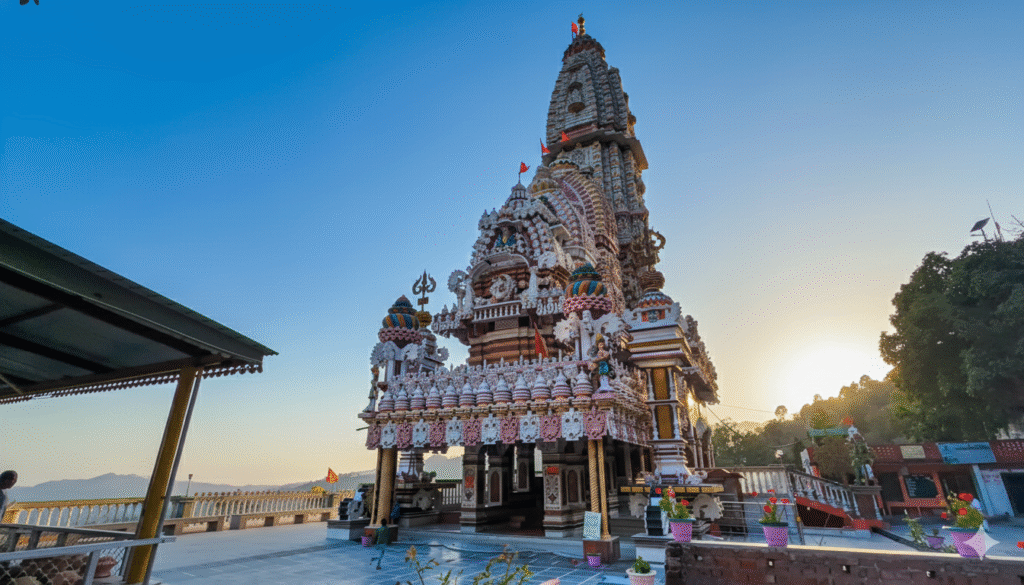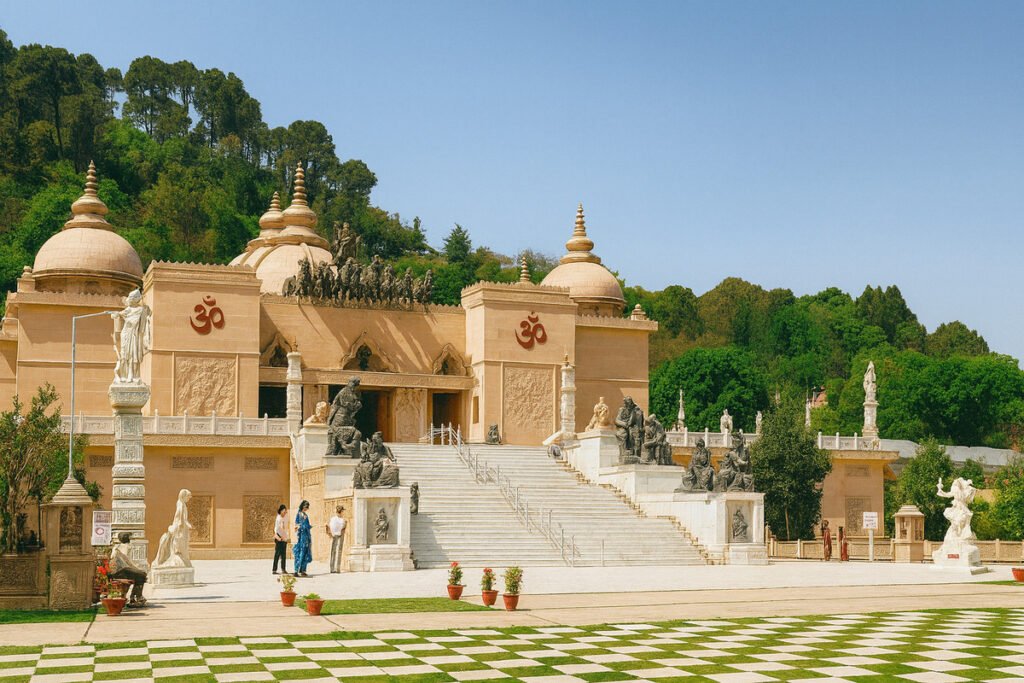
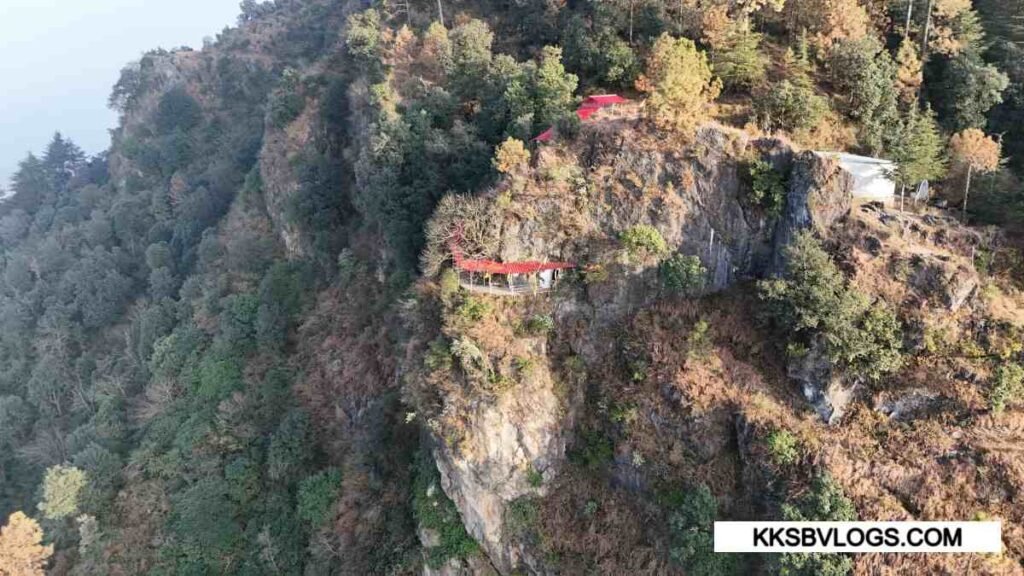
Introduction About Shiv Dhank Temple & Trek
Some places are not found only on Google Maps —
they need to be felt.
Shiv Dhank Temple, Solan is one such place.
It is neither a crowded tourist destination nor a luxury spot. It is a simple, peaceful, and mysterious place where reaching requires a little walking, a little stopping, and a little connecting with yourself.
I had heard about this place many times from local people —
“there is a damru-like sound that comes from a stone,”
“it is best for trekking with family,”
and “from the top, the entire Solan is visible.”
But when I went on this trek myself, I understood that Shiv Dhank is not just a temple, it is an experience. I had heard about this place many times from local people —
some call it Shiv Dhank, while others know it as Shiv Dhak.
They spoke about a damru-like sound coming from a stone,
said it was perfect for a family trek,
and claimed that from the top, the entire Solan is visible.
Shiv Dhank Temple Solan – A Mysterious Trek and a Spiritual Experience
In today’s time, when everywhere there are reels, crowds, and noise, Shiv Dhank Temple feels like a place that has still preserved its original peace.
There is no loud music here, no commercial setup.
Only jungle, the sound of wind, the tiredness of walking, and a completely different feeling of calm after reaching the top.
This is the place where people come not just for photos, but to feel something from within.
Where Is Shiv Dhank Temple Located? (Location, Route & Distance from Solan)
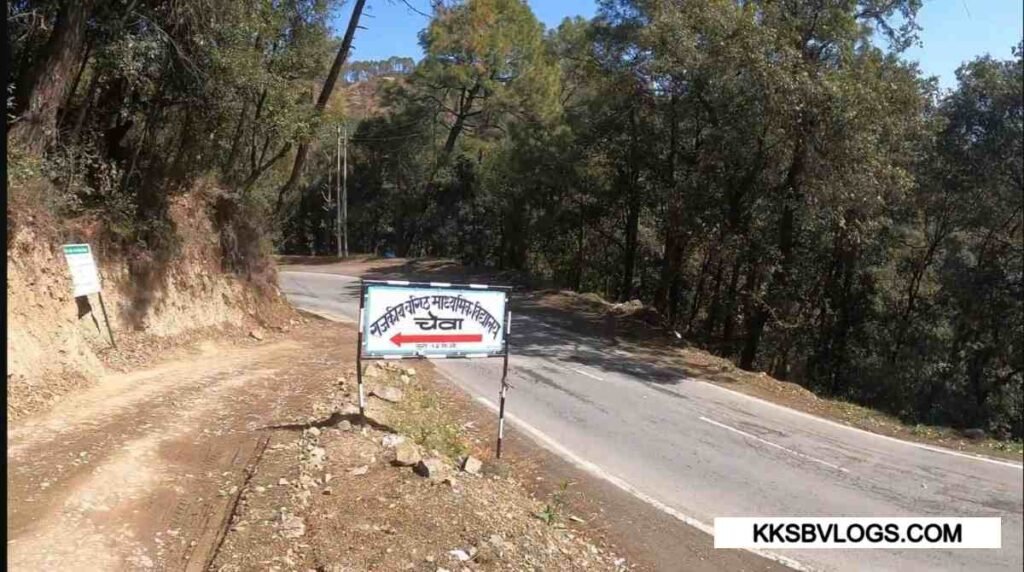
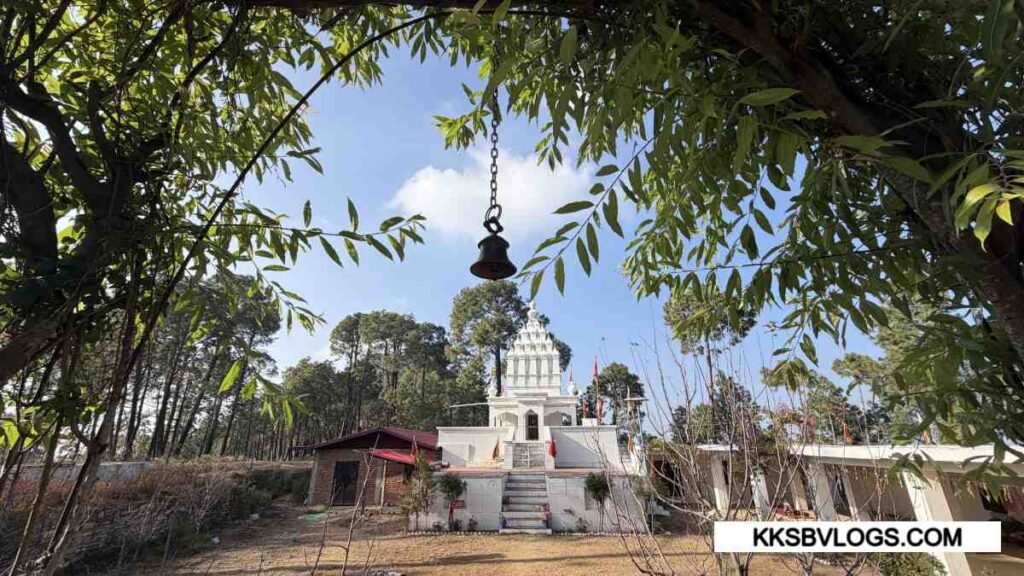
Shiv Dhank Temple is located in the Solan district of Himachal Pradesh.
This place lies near the Chandigarh–Shimla Highway, but the trek starts after going a little inside towards the forest from the highway.
For people coming from Solan:
- They cross the area around Solan Railway Station
- After going approximately 5–7 km inside from the highway, a point comes
- From here, a kachcha (unpaved) road starts
Cars or bikes can go only till a limited point. After that, walking is compulsory — and honestly, because of this walk, the place becomes even more special.
Shiv Dhank Temple Trek, Solan – Distance, Difficulty & Time Required
If you are looking for a short, safe, and peaceful trek around Solan, then Shiv Dhank trek is a perfect option.
Trek Details:
- Distance: approx 2.5–3 km
- Difficulty: Easy to Moderate
- Time Required: 1 to 1.5 hours
- Suitable For: Beginners, families, solo travelers
The biggest speciality of this trek is that the route is not confusing.
There is only one clear trail. If you keep walking on the same path, you will reach the top without getting lost.
In between, you will definitely get some uphill sections, but they are not too tough. This is why this trek is considered comfortable even for families.
Shiv Dhank Temple Trek Start Point, Parking & Entry Details
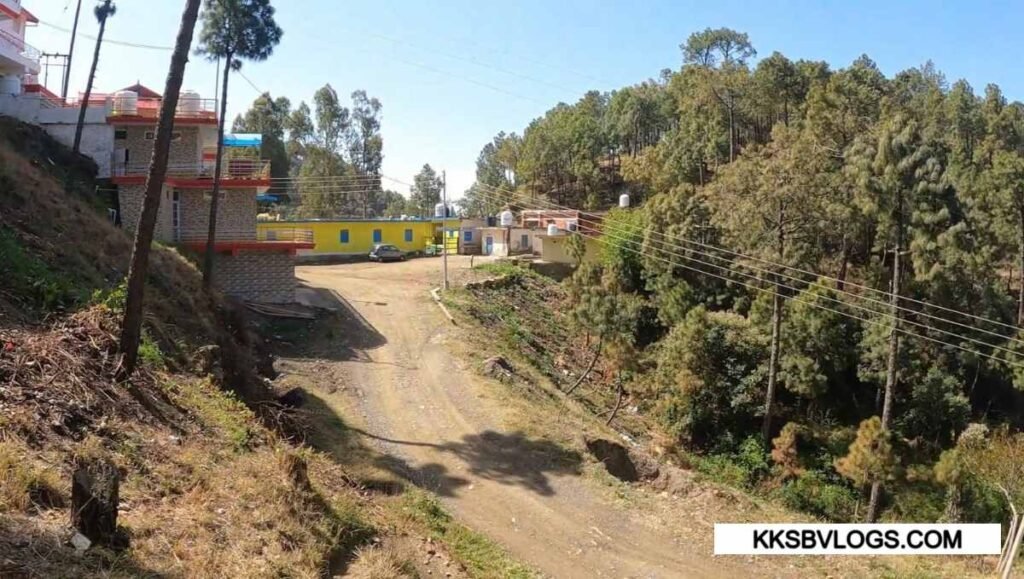
The road till where the vehicle can go may be a little uneven. In the last stretch, you get a unpaved road, from where the trek officially starts.
One thing should be clearly understood here —
this is not a commercial trekking point.
That means:
- No shops
- No cafes
- No signboards
That is why it is very important to carry water and some snacks from below.
With comfortable shoes and basic planning, this trek remains quite smooth.
Nature, Forest & Scenic Views During Shiv Dhank Temple Trek
As you keep climbing up, the noise of the city stays behind and the silence of the forest begins.
During the trek, you experience:
- Dense Deodar and Chir trees
- Open valley views
- Cold and fresh air
- A completely peaceful environment
At some points, you can see the entire Solan-side area.
When you turn back and look, it feels surprising how quickly the city has been left behind.
This trek is best for people who:
- Want to stay away from crowds
- Search for peace in nature
- Want a meaningful hike without too much effort
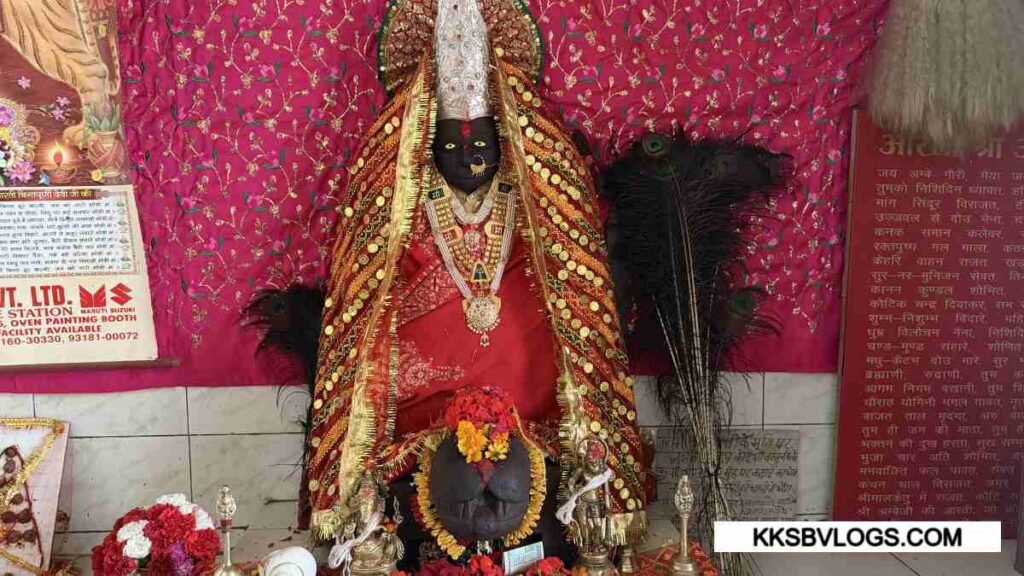
Shree Nagarkoti Mata Ji’s Shaktipeeth That Comes in Between the Trek
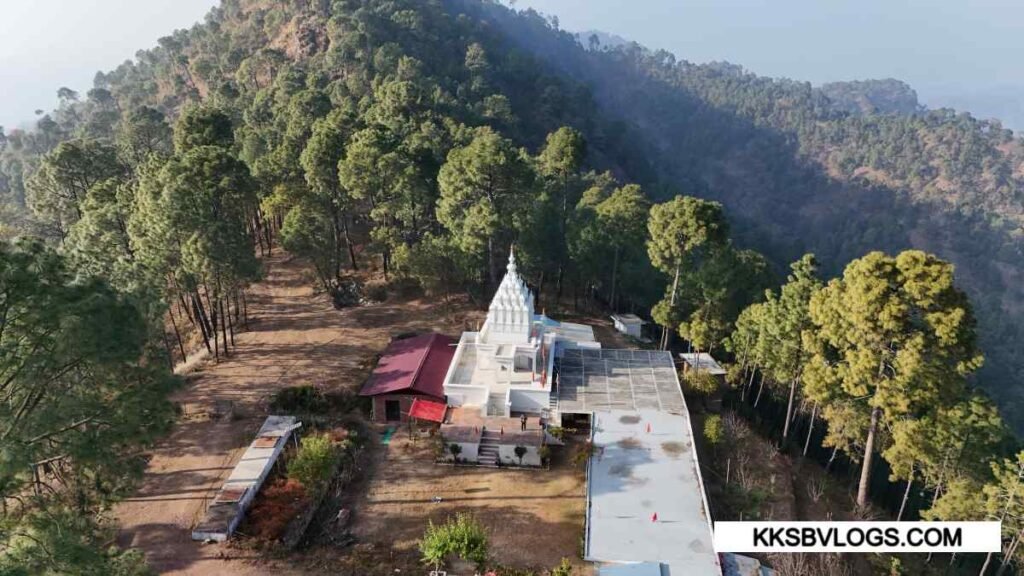
In the middle of the trek, there is a Mata Nagarkoti Ji’s Shaktipeeth, which is an important point of this entire journey.
Here:
- Drinking water is available
- You can take some rest
- You feel positive and peaceful energy
Local people say that the priest here is from Ayodhya, With time, different priests continue to serve at the temple and this place has been a center of faith for a long time.
It takes around half an hour to reach here from the parking point, which is why it naturally becomes a perfect break point.
The Mata Nagakoti Temple holds great importance for the local people, as it is dedicated to their clan goddess, Maa Kulja. The temple has been standing at the same place for many years, and people from different generations have strong faith in it. With time, villagers and devotees have contributed together to improve the temple. Because of this continuous effort, the temple, which was once very simple, has now become beautiful and well developed.
Every year, during Navratri, a two-day fair is organized here. People from nearby villages come in large numbers to take part in it. Along with local shops and traditional sweets, games like wrestling (dangal) and kabaddi are also organized. These activities show the village culture and the feeling of unity among the people. The temple is not only a place of worship but also an important part of local traditions and community life.
History of Shiv Dhank Temple, Local Beliefs & Meaning of the Name
Shiv Dhank Temple is not a newly constructed temple.
According to local people, this place is considered swayambhu, which means that the Shivling and the cave appeared on their own between nature.
The word “Dhank” in the local language means a steep rock or standing cliff. Since the temple is located on such a steep hill, this place got the name Shiv Dhank.
Some local legends say that earlier this place was completely surrounded by dense forest. Later, when people came to know about the cave and the Shivling here, slowly this place became a center of faith for the people. According to some locals, several years ago during the British period, streams resembling the color of milk once flowed from these stones; however, with time, these streams eventually dried up.
Note: All these are local beliefs and folk stories, which people believe with devotion.
The Mystery of Shiv Dhank Temple – “Damru” Sound Coming From a Stone
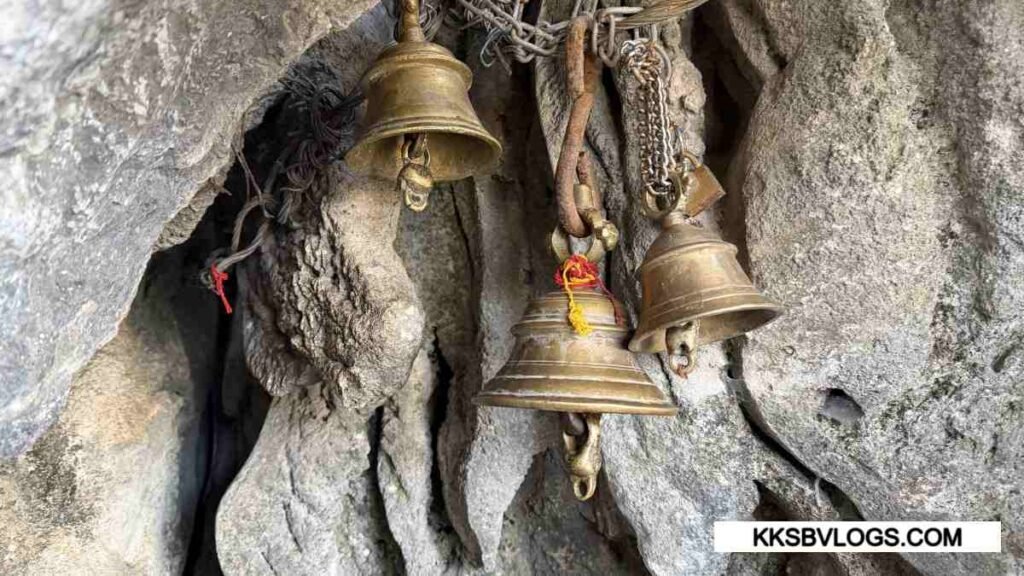
The most talked-about aspect of this temple is —
the damru-like sound coming from a stone.
Near the temple, there is a special stone. When it is struck in the right way, it produces a sound similar to a damru. For someone hearing it for the first time, this experience is quite surprising.
Some people consider it a sign of Lord Shiva, while others believe it is the result of natural vibration. Whatever the reason may be, the experience is completely real and can be felt deeply from within.
Some locals also believe that many years ago, during the British era, milk-colored streams flowed from these stones, but they gradually dried up over time.
Shiv Dhank Temple Darshan Experience, Cave & Shivling
Before entering the temple, shoes and slippers have to be removed outside.
The environment inside is completely peaceful —
no crowd, no noise.
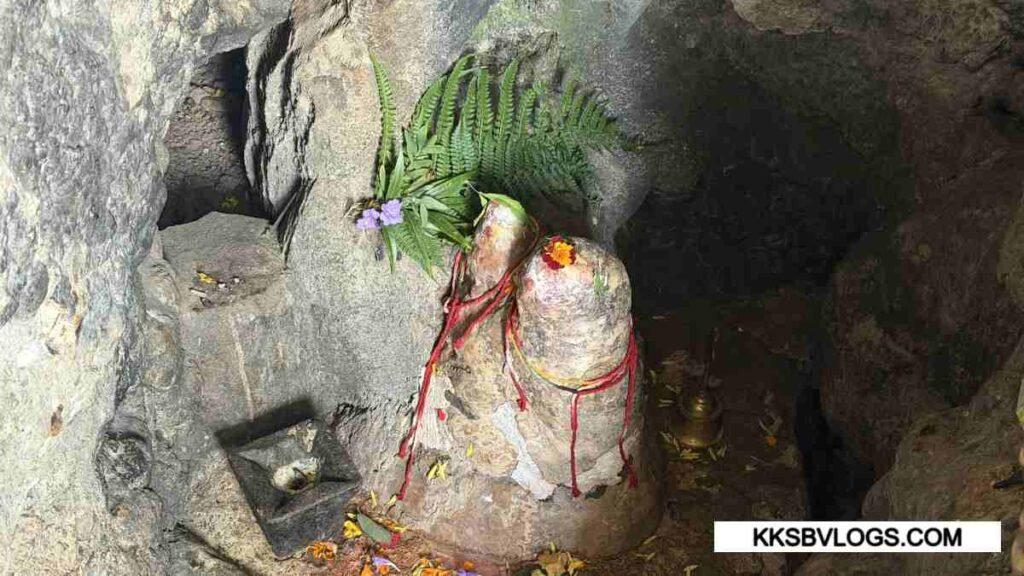
The Shivling is located inside a natural cave. As soon as you enter the cave, both the temperature and the sound change. It feels as if the outside world pauses for some time.
After darshan, it feels like:
- the tiredness of the trek disappears
- the mind becomes calm
- and a completely different kind of peace is felt
Best Time to Visit Shiv Dhank Temple
Shiv Dhank Temple can be visited almost throughout the year, but the best time is:
- March to June – pleasant weather
- September to November – greenery and clear views
During monsoon, the trek can become slippery, so extra caution is necessary.
The trek is possible in winter as well, but cold and fog should be kept in mind.
Important Travel Tips for Shiv Dhank Temple Trek
- Wear comfortable trekking shoes
- Carry water bottles and snacks from below
- Maintain cleanliness in the forest area
- Mobile network can be weak
- Take care of your safety during solo treks
Where Is Shiv Dhank Temple Located & How to Reach (Exact Route from Solan, Chandigarh & Shimla)
Shiv Dhank Temple is located in the Solan district of Himachal Pradesh, close to the Chandigarh–Shimla Highway.
The temple is hidden inside forested hills, and the final part of the journey must be completed on foot.
📍 Exact Route from Solan (Most Important)
From Solan, travel on the Solan–Dharampur road for approximately 5–6 km.
On this route, you will find a turning towards Chewa School.
Take this road and continue for about 1 km.
- Vehicles can be parked at this point
- This marks the official starting point of the trek
Beyond this, the road becomes unpaved, and vehicles cannot go further.
From here, the trek to Shiv Dhank Temple begins.
Reaching the Shiv Dhank Trek Start by Bus (Budget-Friendly Option)
- Take a local bus from Solan towards Dharampur
- Get down on the main road near the Chewa School turning
- Local bus fare is approximately ₹10
From the main road, you can walk towards the parking and trek starting point.
Taxi / Cab Option
From Solan
- Distance: 6–7 km
- Time: 20–25 minutes
- Taxis are easily available from Solan Bus Stand and Solan Railway Station
From Chandigarh
- Distance: ~65 km
- Time: 2–2.5 hours
From Shimla
- Distance: ~45 km
- Time: 1.5–2 hours
By Train
- Nearest railway station: Solan Railway Station
- From the station, take a taxi towards the Chewa School turn and trek start point
📍 Places to Visit Near Shiv Dhak Temple
If you are visiting Shiv Dhak Temple, there are a few peaceful and meaningful places nearby that you can easily include in your trip. Most of these places are close to Solan and connect well with the same spiritual and nature-based journey.
- Panch Mundiya Temple
Panch Mundiya Temple is located about 20 minutes uphill from Shiv Dhak Temple and follows the same trekking route. It is a quiet place surrounded by nature, known more for its calm feeling than for crowds or structures. Many people visit Panch Mundiya after Shiv Dhak to spend some time in silence. - Maa Nagarkoti Temple
Maa Nagarkoti Temple comes in between the Shiv Dhak trekking route. It is a small but sacred place where trekkers usually stop for a short rest. The temple adds a spiritual pause to the trek and is respected deeply by locals. - Jatoli Shiv Temple
Jatoli Shiv Temple is one of the most well-known temples near Solan and is considered among the tallest Shiva temples in Asia. It is easily accessible by road and can be visited comfortably after completing the Shiv Dhak trek. - Mohan Heritage Park
Mohan Heritage Park is a nice place to understand Himachal’s traditional lifestyle and culture. It showcases old-style houses, tools, and village life, making it a good stop if you are interested in local heritage. - Shoolini Mata Temple
Shoolini Mata Temple is one of the most important religious places in Solan. The town itself is named after Goddess Shoolini, and the temple holds great importance for locals as well as visitors. - Bon Monastery (Menri)
Bon Monastery, also known as Menri Monastery, is a peaceful Buddhist monastery near Solan. The surroundings are calm, and the place is ideal if you want to sit quietly for a while or learn about the Bon tradition.
Shiv Dhank Temple / Trek Location Photos & Videos
A detailed video of the Mata Nagakoti Temple will be uploaded soon on our YouTube channel KKSB VLOGS. For a better and clear visual experience, do visit the channel and watch the video so you don’t miss any important details.
Also Follow us on INSTAGRAM for short Videos, new hidden treks and Popular Places.
Shiv Dhank Temple / Trek Photos & / Videos
Shiv Dhank Temple & Trek Google Map Location
FAQs About Shiv Dhank Temple & Trek
Where exactly is Shiv Dhank Temple located?
Shiv Dhank Temple is in Solan district, Himachal Pradesh. It’s not directly on the highway — you have to leave the main road near Solan and go inside the forest area for a few kilometres before the trek actually starts.
Is the Shiv Dhank Temple trek difficult?
Honestly, no. The trek is not very difficult. It’s mostly a steady uphill walk and usually takes around 1 to 1.5 hours. Even first-time trekkers manage it comfortably if they walk at their own pace.
Can beginners or families do this Shiv Dhak trek?
Yes, they can. You don’t need any special trekking skills here. Families, beginners, and even older people do this trek regularly. Just wear good shoes and carry water.
Do you really hear a damru-like sound at Shiv Dhank Temple?
Yes, and this is something many people experience themselves. Near the temple, when you tap certain stones with your hand, you can clearly hear a sound similar to a damru. It’s not a story — visitors actually try it and hear it.
What is the belief behind Shiv Dhank Temple?
Local people believe that Shiv Dhank is a naturally formed (swayambhu) place of Lord Shiva. There is no written historical proof, but the belief has been passed down for generations and is deeply respected by locals.
Is there any temple in between the Shiv Dhank trek?
Yes. During the trek, you come across Maa Nagarkoti Temple. Most people stop here for a short break. Drinking water is available, and the place feels very calm.
What is the best time to visit Shiv Dhank Temple?
Clear weather months are best. March to June and September to November are ideal. During monsoon, the path becomes slippery, so it’s better to avoid heavy rain days.
Are there shops or food stalls near the temple?
No, there aren’t. Shiv Dhank is not a commercial place. You won’t find shops or cafés nearby, so it’s better to carry your own water and snacks.