Kalpa Village Kinnaur – A Complete Travel Guide
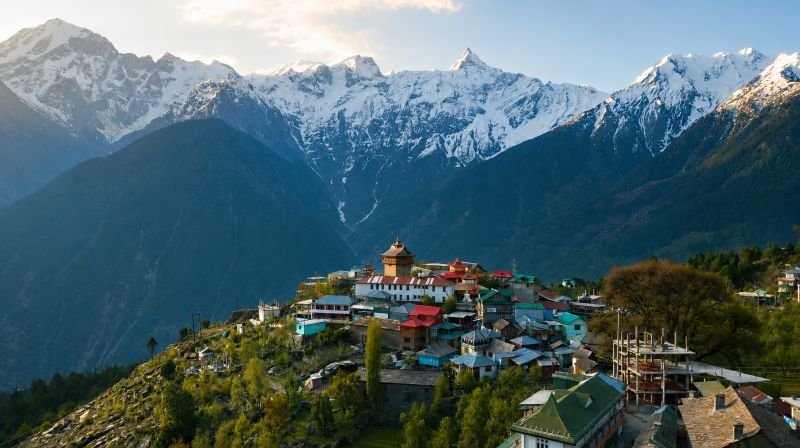
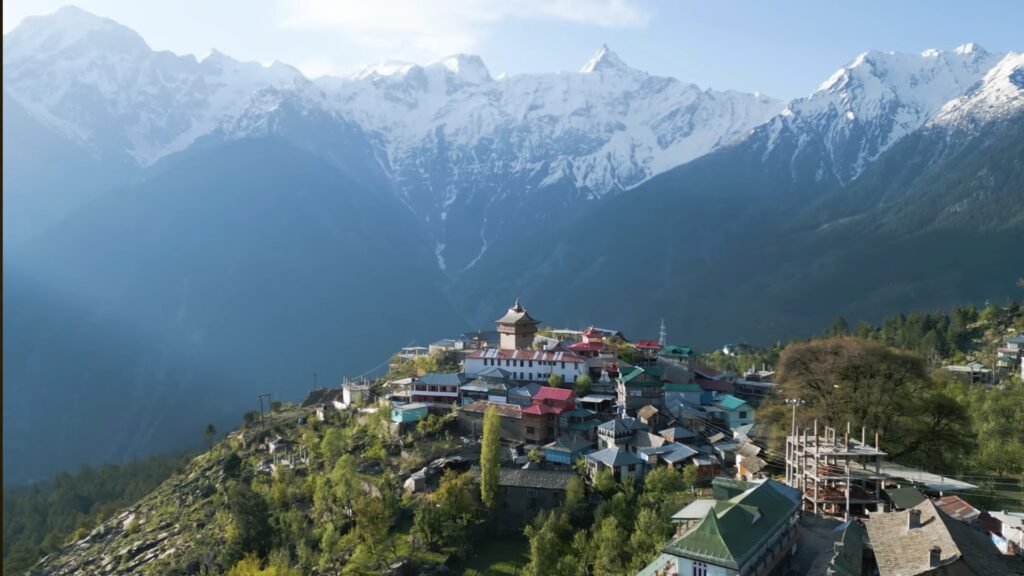
Kalpa, situated in the Kinnaur district of Himachal Pradesh, is such a mountain village where, as soon as you reach, the first thing that attracts attention is the massive snow-covered peaks standing in front. Situated at an altitude of around 2,960 metres, this village is known for its peaceful environment, traditional Kinnauri culture, apple orchards and spectacular views of the Kinnaur Kailash mountain range.
Kalpa is situated in the mountains above Reckong Peo, the district headquarters of Kinnaur. Once it was also the headquarters of Kinnaur district, but later the district headquarters was shifted to Reckong Peo. Today, Kalpa is included among those selected mountain villages of Himachal Pradesh where, along with natural beauty, the old culture of Kinnaur and local lifestyle can also be seen closely.
This village is also the ancestral village of Master Shyam Saran Negi, famous as India’s first voter. Old wooden houses, the blend of Hindu and Buddhist traditions, traditional temples, monasteries, local festivals and apple orchards spread around make Kalpa not only a tourist destination, but also a special place to understand the culture of Kinnaur.
If instead of crowded hill stations you like peaceful mountains, local culture, photography, trekking and spending some time close to the Himalayas, then Kalpa can be a great place for you.
Why is Kalpa Village Famous?
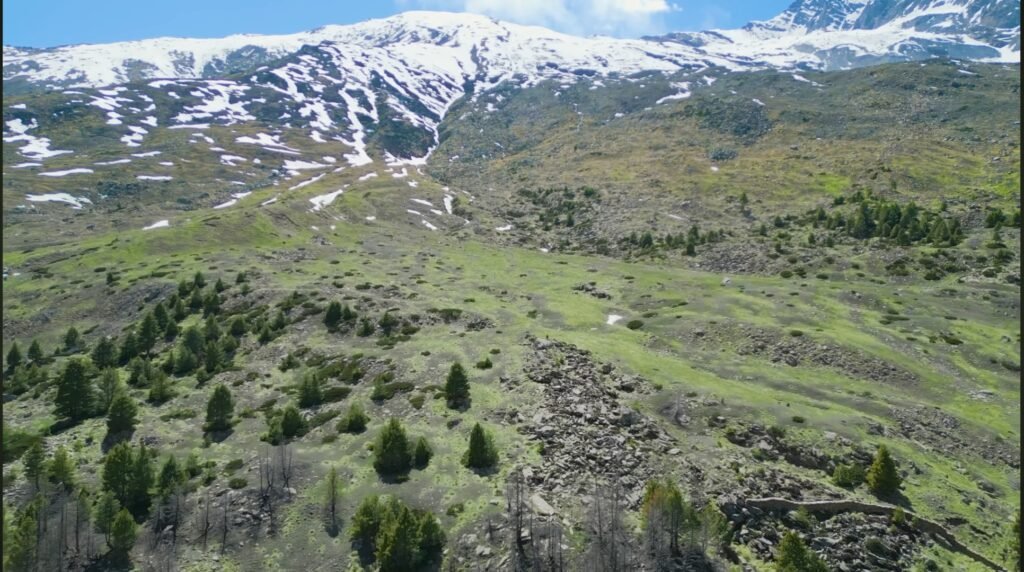
The biggest identity of Kalpa village is the Kinnaur Kailash mountain range visible from here. In clear weather, spectacular views of high snow-covered peaks can be seen from many parts of the village. With the first light of morning and changing colours of evening, the view of these mountains becomes even more beautiful, this is the reason why Kalpa is quite popular among photographers and nature lovers.
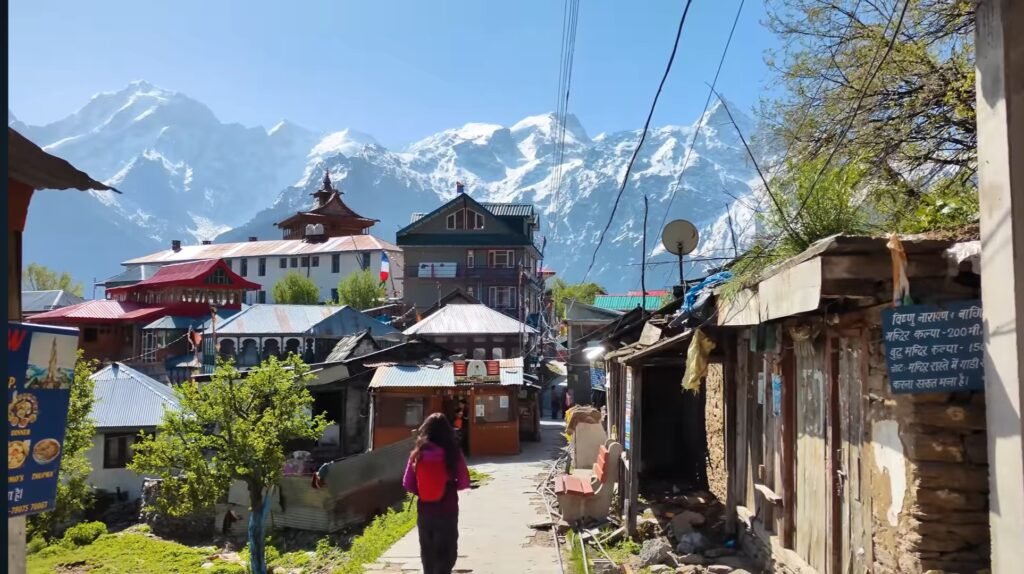
But Kalpa’s identity is not limited only to its mountain views. This village is also known for its traditional Kinnauri culture, old wooden houses, apple orchards, local clothing and religious heritage. Here, Narayan-Nagini Temple, Buddhist monastery and many cultural sites around show a glimpse of the Hindu and Buddhist traditions of Kinnaur.
Kalpa has also had historical importance. After Kinnaur district was formed in the year 1960, Kalpa was made the district headquarters. Later, the administrative headquarters was shifted to Reckong Peo situated below. Apart from this, the connection with India’s first voter Master Shyam Saran Negi also gives this village a special identity at the national level.
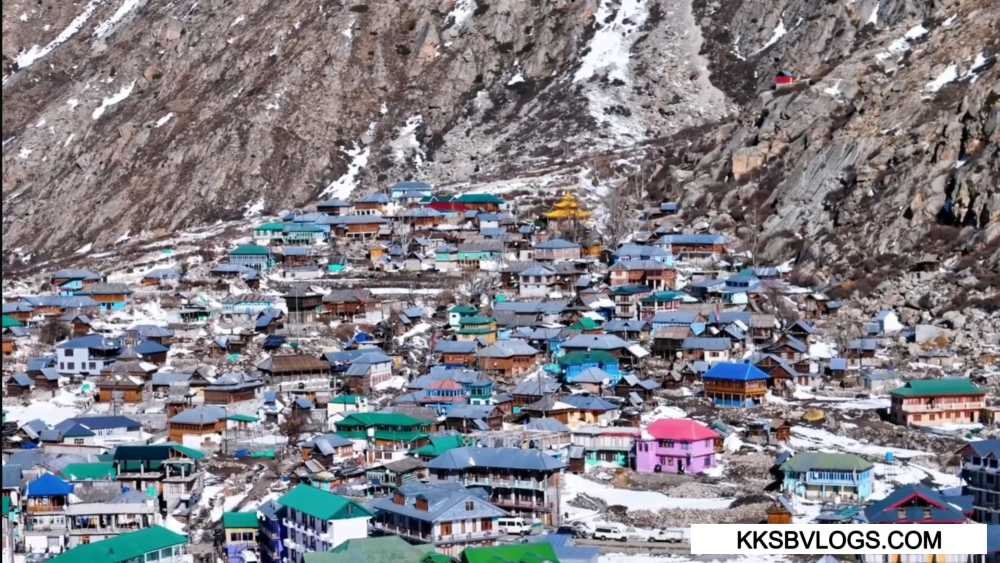
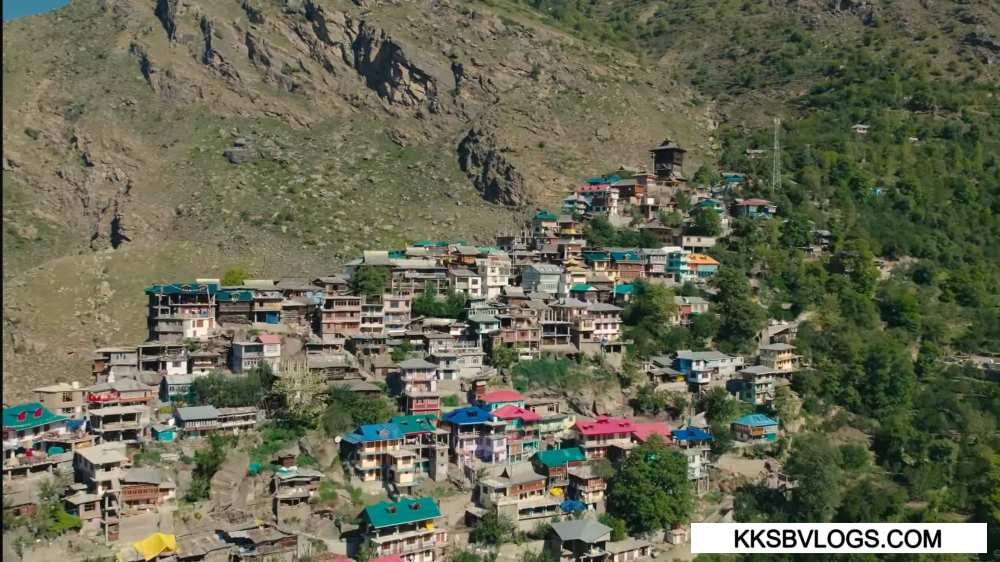
Around Kalpa, for those who like trekking, the Chaka area, the route going towards Roghi for natural views, apple orchards and peaceful village lanes are also part of the attraction. Snow-covered Kalpa in winter and the same village surrounded by greenery and apple orchards in summer gives a completely different experience.
History of Kalpa Village
Kalpa is known not only for its natural beauty, but also for its important role in the administrative and cultural history of Kinnaur. After Kinnaur came into existence as a separate district on 1 May 1960, Kalpa was made the district headquarters. Later, the administrative headquarters was shifted from Kalpa to Reckong Peo situated below, which today is the headquarters of Kinnaur district.
In old times, the Kinnaur region also had trade contact with Tibet. According to local elders, people from Kalpa and surrounding areas used to go towards Tibet for trade. Because of being situated in a border Himalayan region, different influences can also be seen in the culture, clothing, architecture and religious traditions here.
The old settlements of Kalpa, traditional wooden houses, temples and Buddhist religious sites still show a glimpse of its long cultural history. The old school situated in the village is also part of its historical identity, which is mentioned as having been established in 1890.
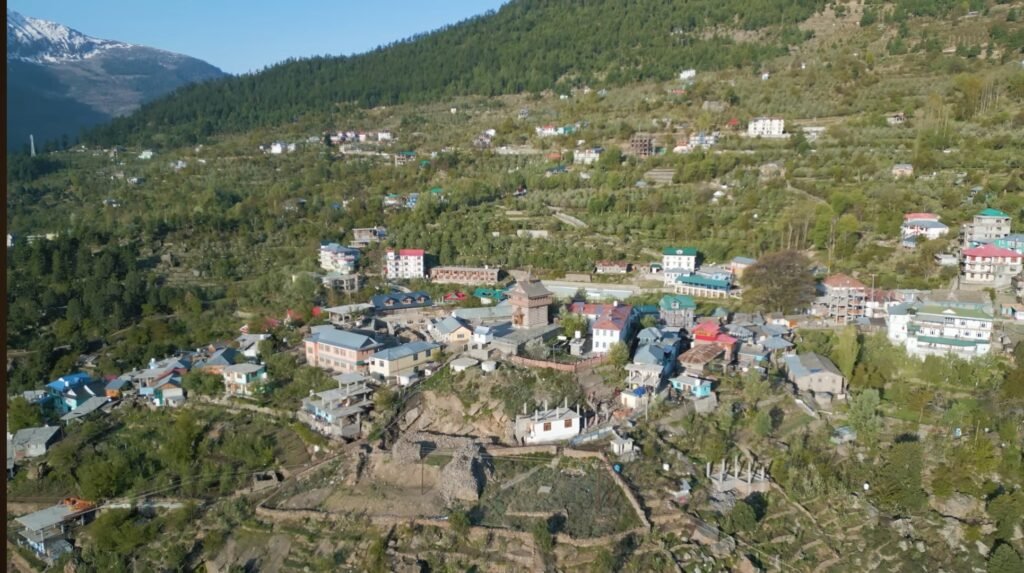
Kalpa is also the ancestral village of Master Shyam Saran Negi, famous as India’s first voter. For this reason, this small Himalayan village is also specially connected with the democratic history of India.
How Kalpa Got Its Name
There are many interesting legends prevalent at the local level regarding the name of Kalpa. For these very reasons, different stories are heard regarding the old identity of the village. Written historical evidence of these stories is limited, so it is more appropriate to understand them as local folk beliefs.
According to one prevalent belief, when seen from a height, the shape of Kalpa village appears like the nail of the index finger. It is said that in the local language, the word “Cheene” was used for nail and because of this the village came to be called “Cheene.” Local people also call Kalpa “Reshamoliyo Cheene,” whose meaning is said to be a village soft like silk.
Another folktale is connected with Goddess Chandika. According to the belief, once there was a conflict here between Goddess Chandika and local Thakurs, in which the Thakurs were killed. After this, the Thakur’s wife, whose name is said to be “Chinh,” reached the Goddess. According to the folktale, the Goddess promised her that the village would be named after her. It is said that from this the name “Chinh” became prevalent and with time its form kept changing.
Many such local stories regarding the old name of Kalpa are still heard today. These oral traditions make the history of the village even more interesting, but it is correct to present them as local folktales rather than verified history.
Was Kalpa Earlier Known as Chini?
Regarding the old name of Kalpa, the name “Cheeni” or “Chini” is discussed the most. According to local people and many prevalent accounts, Kalpa was earlier also known by the name Chini. Even today, mention of this name can be heard in the conversations of old people and in some stories connected with the region.
One prevalent local claim is also that during the 1962 India-China war, the name of Kalpa was recorded as “Cheeni” in government papers at many places. It is said that because of the confusion arising regarding the name with China, later its name was changed to Kalpa. However, clear official or historical documents verifying this story are not easily available, so it is appropriate to see it only as local oral tradition and a prevalent claim.
In some local stories, “Cheeni Kalpa” is described as an area once connected with China or even as an ancient capital, but reliable written historical evidence supporting this claim is not found. Similarly, some claims connected with the 1962 war are also heard at the local level, but it would not be correct to present them as verified history.
What is certain is that Kinnaur had old trade and cultural contact with Tibet. Local elders say that earlier people of this region used to go to Tibet for trade. Because of the border location and old trade relations, many stories connected with Kalpa’s identity became part of local memory with time.
Culture and Traditional Life in Kalpa
The real identity of Kalpa is visible not only in snow-covered mountains and beautiful views, but also in the traditional life here. Even today, a glimpse of Kinnauri culture can be seen in old wooden houses, local clothing, food, festivals and religious traditions in the village.
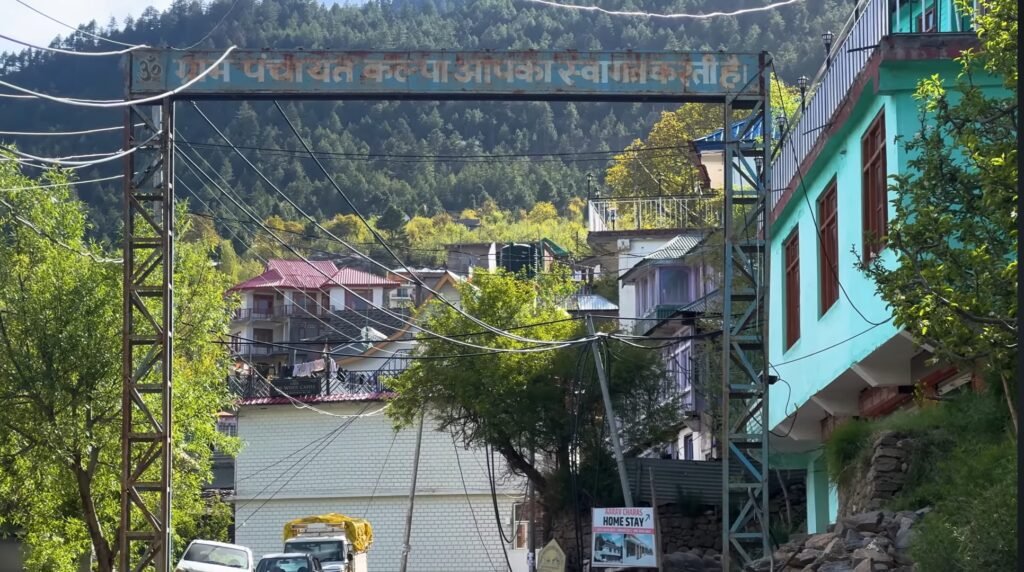
People here use the local dialect, which is known as “Hamkaz” in the Kalpa region. Although with changing times the use of Hindi has also increased, the local language is still an important part of the cultural identity of the people.
In Kalpa and surrounding areas, apple horticulture is deeply connected with local life and the economy. According to the season, the colour of the orchards spread around the village keeps changing. Apart from this, local people have also grown traditional crops such as koda, fafra, ogla, barley, amaranth, rajmah and wheat.
Was Kalpa Earlier Known as Chini?
Regarding the old name of Kalpa, the name “Cheeni” or “Chini” is discussed the most. According to local people and many prevalent accounts, Kalpa was earlier also known by the name Chini. Even today, mention of this name can be heard in the conversations of old people and in some stories connected with the region.
One prevalent local claim is also that during the 1962 India-China war, the name of Kalpa was recorded as “Cheeni” in government papers at many places. It is said that because of the confusion arising regarding the name with China, later its name was changed to Kalpa. However, clear official or historical documents verifying this story are not easily available, so it is appropriate to see it only as local oral tradition and a prevalent claim.
In some local stories, “Cheeni Kalpa” is described as an area once connected with China or even as an ancient capital, but reliable written historical evidence supporting this claim is not found. Similarly, some claims connected with the 1962 war are also heard at the local level, but it would not be correct to present them as verified history.
What is certain is that Kinnaur had old trade and cultural contact with Tibet. Local elders say that earlier people of this region used to go to Tibet for trade. Because of the border location and old trade relations, many stories connected with Kalpa’s identity became part of local memory with time.
Culture and Traditional Life in Kalpa
The real identity of Kalpa is visible not only in snow-covered mountains and beautiful views, but also in the traditional life here. Even today, a glimpse of Kinnauri culture can be seen in old wooden houses, local clothing, food, festivals and religious traditions in the village.
People here use the local dialect, which is known as “Hamkaz” in the Kalpa region. Although with changing times the use of Hindi has also increased, the local language is still an important part of the cultural identity of the people.
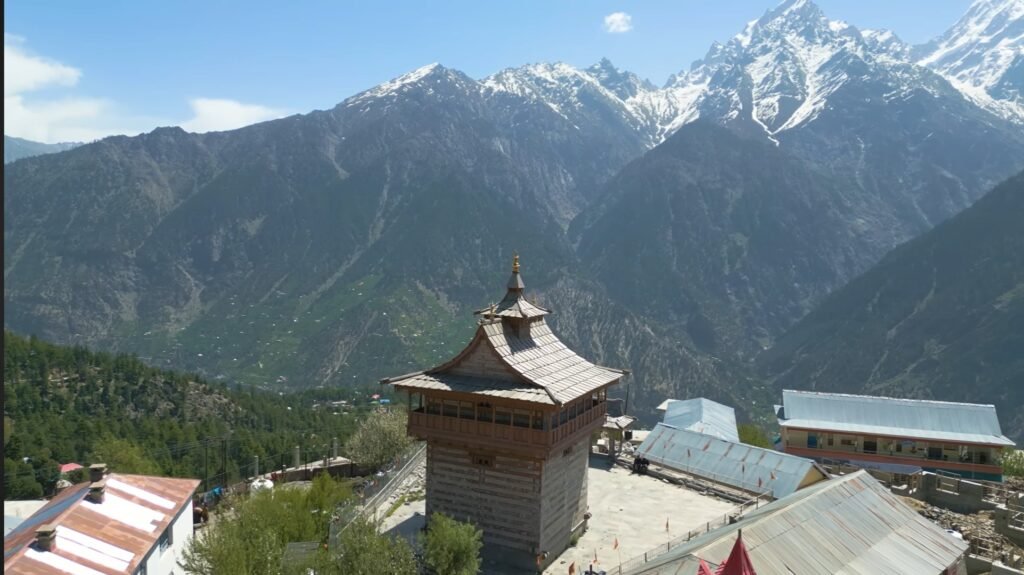
In Kalpa and surrounding areas, apple horticulture is deeply connected with local life and the economy. According to the season, the colour of the orchards spread around the village keeps changing. Apart from this, local people have also grown traditional crops such as koda, fafra, ogla, barley, amaranth, rajmah and wheat.
The presence of Hindu and Buddhist traditions is also visible in the religious culture of the Kalpa region. Through temples, Buddhist religious sites, local gods and goddesses and traditional festivals, this cultural blend remains a part of the everyday life of the village.
A good way to understand the culture here most closely is not only to see the main tourist places, but to walk through the old lanes of the village, see the structure of traditional houses, talk to local people and feel the community life here during a local festival.
Major Festivals Celebrated in Kalpa
The cultural identity of Kalpa is also connected with the traditional festivals here. Among these, the Raulane Festival is considered the most unique, while festivals like Sazo and Phulaich show the religious and cultural traditions of Kinnaur.
The Sazo festival is known for local beliefs connected with the farewell of the deities. Whereas Phulaich or Ukhyang is called the festival of flowers, which includes traditions connected with bringing flowers, dance and singing and the memory of ancestors. The dates and customs of these festivals may differ in different villages.
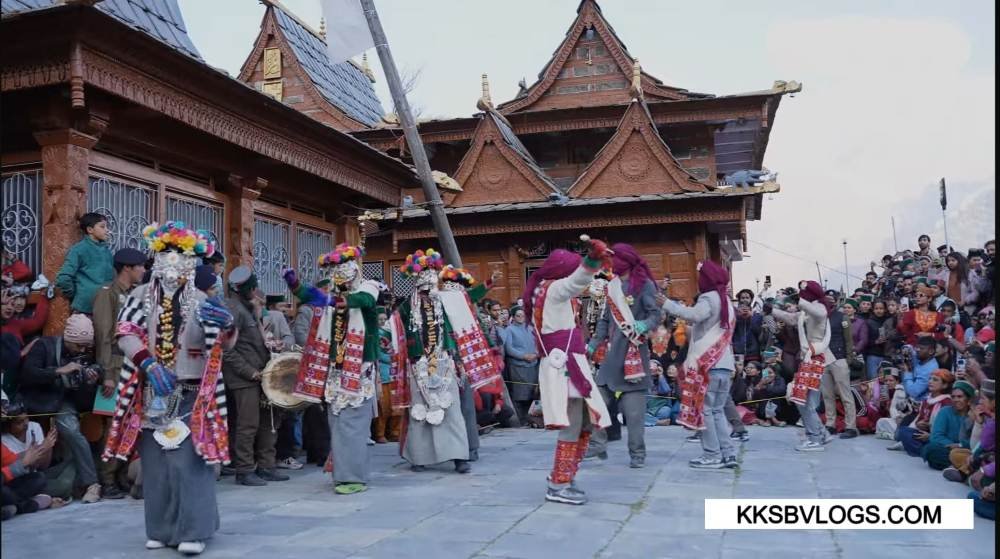
Raulane Festival – Kalpa’s Mysterious Tradition
The Raulane or Raulane Festival is one of the most mysterious traditions of Kalpa. It is considered connected with local folk faith and divine fairies or protective powers called “Saunis.”
In this festival, two men wear special Kinnauri attire and take the symbolic form of bride and groom. Their faces are covered with woollen clothes and ornaments, making the entire scene appear extremely mysterious.
In some places this tradition is connected with the farewell of divine fairies, while elsewhere it is connected with seasonal change and the protection of the community. Therefore, instead of one fixed story, it is better to understand it as an ancient folk tradition of Kalpa.
Places to Visit in Kalpa
Along with natural beauty, many religious, cultural and historical places can also be seen in Kalpa. The major attractions here are:
Narayan Nagini Temple
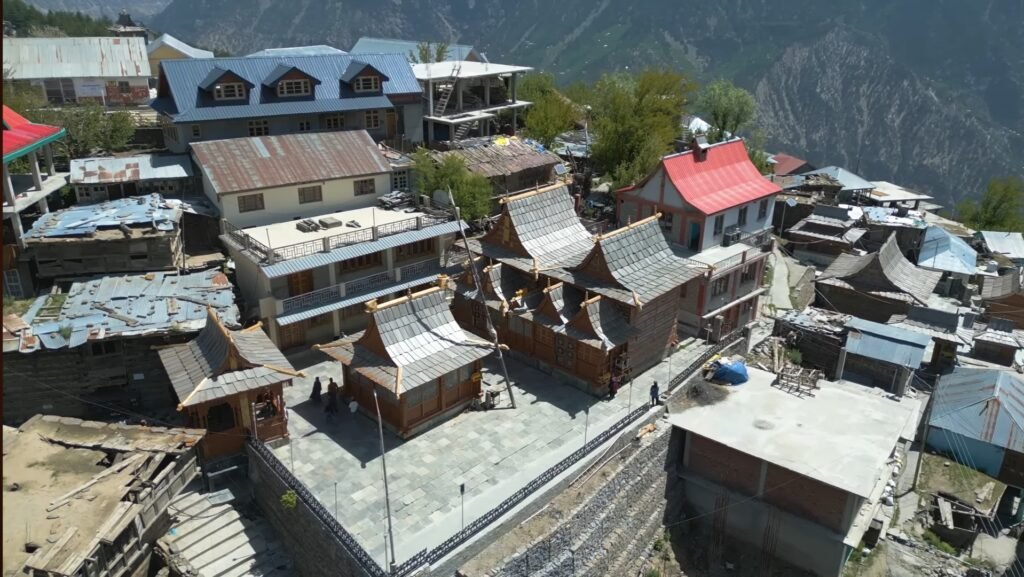
The Narayan Nagini Temple of Kalpa is known for its traditional Kinnauri architecture and religious importance. Beautiful wooden craftsmanship includes it among the major sightseeing places of the village.
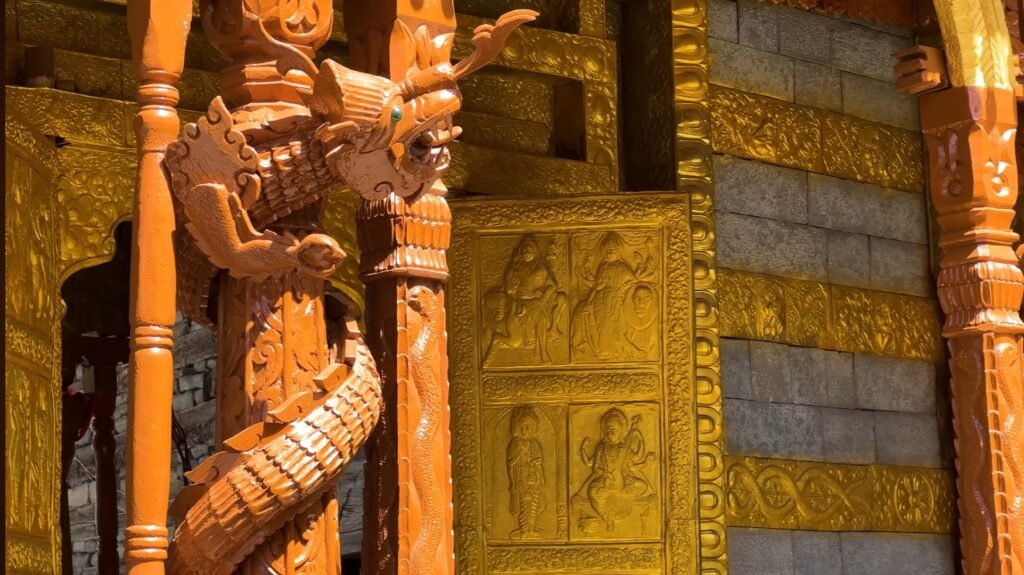
Buddhist Monastery
The Buddhist monastery of Kalpa shows the Buddhist heritage of the region. Because of the peaceful environment, this place is also good for spending some time in peace.
Kinner Kailash View
The Kinnaur Kailash mountain range visible in front from Kalpa is the biggest attraction here. In clear weather, spectacular views of snow-covered peaks are visible.
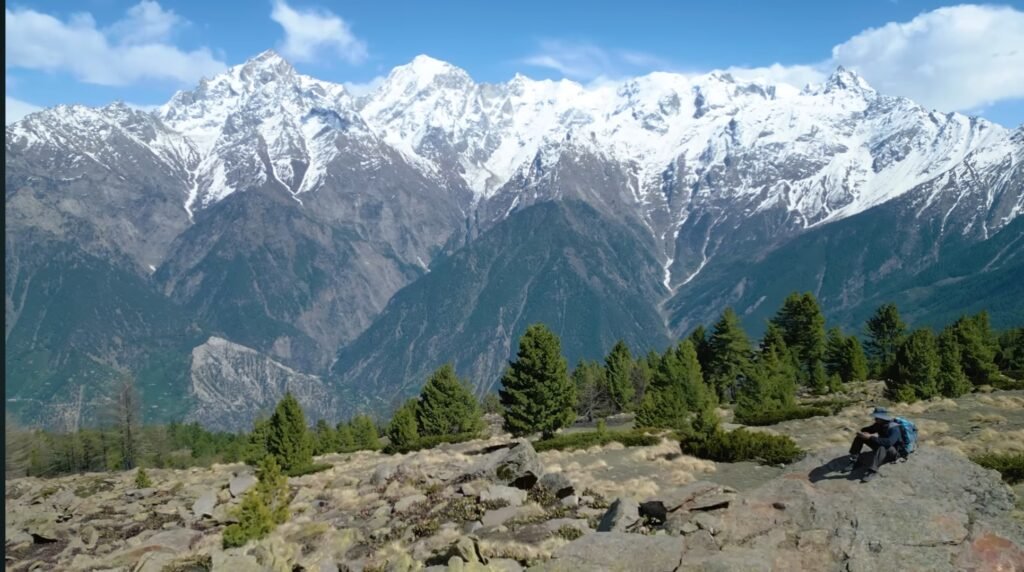
Chaka Peak Trek Kalpa
For those who like trekking, the Chaka Peak area is a popular option. This route gives an experience of high-altitude Himalayan views and natural beauty.
Old Kalpa Village
In the old lanes of Kalpa, traditional wooden houses, local life and a glimpse of Kinnauri culture can be seen.
Things to Do in Kalpa
The journey to Kalpa is not limited only to sightseeing places. Here you can:
- See the changing colours of Kinnaur Kailash in the morning and evening.
- Walk around the apple orchards.
- See the lanes and traditional houses of old Kalpa village.
- Visit local temples and Buddhist monasteries.
- Enjoy photography and sunrise views.
- Trek in the Chaka area according to weather and fitness.
- Try local Kinnauri food according to availability.
Pro Tip: To see clear views of Kinnaur Kailash, morning time is often better, because later clouds can cover the mountains.
Kinnaur Kailash View from Kalpa
The biggest speciality of Kalpa is the Kinnaur Kailash mountain range visible from here. In clear weather, spectacular views of high snow-covered peaks can be seen from many parts of the village.
The first light of morning and changing colours during evening make these mountains even more beautiful. Morning time can be better for photography, because as the day progresses, many times clouds cover the peaks.
Chilgoza and Traditional Farming in Kalpa
In Kalpa and the surrounding areas of Kinnaur, Chilgoza is an important natural produce. The dry fruit obtained from it is considered quite valuable and has good demand in the market.
Apart from this, local people traditionally also grow crops such as koda, fafra, ogla, barley, amaranth, rajmah and wheat. Apple horticulture is also an important part of Kalpa’s rural life and local economy.
Best Time to Visit Kalpa
The best time to visit Kalpa depends on the purpose of your journey. Between March and June, the weather remains relatively pleasant and during spring, flowers can also be seen in the apple orchards.
September to November is considered a good time for clear skies, mountain views and photography. Whereas between December and February, snowfall can be experienced, but the cold is quite intense and road travel may be affected due to bad weather.
Travel Tip: Before travelling during monsoon and winter, definitely check the weather and road conditions.
How to Reach Kalpa
Kalpa is connected by road with Reckong Peo and other major cities of Himachal Pradesh. The Hindustan-Tibet Road is the main route to reach Kinnaur.
By Road
The distance from Shimla to Reckong Peo is approximately 235 km. HRTC buses and taxis are available up to here. From Reckong Peo, Kalpa can be reached by local bus or taxi.
By Train
The nearest major railhead to Kalpa is Shimla. From there, the onward journey has to be done by bus or taxi.
By Air
The nearest airport to Kalpa is Shimla Airport. From there, Kalpa can be reached further by road.
Apart from this, Heli Taxi service is also available from Shimla to Reckong Peo, which can be a faster option to reach Kinnaur. However, its flights depend on weather, schedule and availability, so before travelling, definitely check the latest timetable and booking information. From Reckong Peo, Kalpa can be reached by taxi or local transport.
Travel Tip: The roads of Kinnaur are mountainous and sensitive to weather, so definitely check the latest road status before travelling and give priority to travelling during the daytime.
Visitor Information and Travel Tips
Before travelling to Kalpa, it is important to know some practical things, especially if you are going to Kinnaur for the first time.
- There is no general entry fee for exploring Kalpa village, but some religious or private places may have their own rules.
- The weather can change quickly, so carry warm clothes with you.
- Before travelling during monsoon and winter, definitely check the road status.
- It is better to travel on mountain roads during the day rather than at night.
- Respect local rules in temples and monasteries and do not do photography without permission.
- Carry good shoes, water and basic medicines for trekking.
- During winter, road and transport services may be affected due to snowfall.
- Mobile network may not be equally reliable everywhere, so save important information beforehand.
Pro Tip: Keep at least one morning in Kalpa. In clear weather, the view of the Kinnaur Kailash mountain range during sunrise can be one of the most memorable experiences of the journey.
Our Experience at Kalpa Village
When we were on our journey to Kinnaur, Kalpa was already included in our list. We had left from Nako to Kalpa, because at that time the Raulane Festival was also going on here and we wanted to experience this unique tradition ourselves.
As soon as we reached Kalpa, the first thing we saw in front was Kinnaur Kailash. It is difficult to describe the happiness of that moment in words. We had not even come out of that view when the entire Kalpa village appeared in front—and to tell the truth, perhaps we will never be able to forget that moment.
We stayed in Kalpa for two days and during this time also closely explored many places around along with the village. More than the beautiful mountains, we remembered the lovely people here and their simplicity. We talked to local people, met the chairperson of the temple committee and learned many things about the culture, traditions and history of Kalpa.
For us, Kalpa did not remain only a beautiful village, but became one of the most memorable experiences of this entire journey to Kinnaur.
Nearby Attractions from Kalpa
During a journey to Kalpa, many beautiful places around can also be explored:
Reckong Peo
Reckong Peo is the district headquarters of Kinnaur and the main market of the region. From here, local transport, shopping and options for further travel are easily available.
Roghi Village
Roghi Village, situated near Kalpa, is known for its peaceful mountain beauty, traditional life and spectacular views found along the route.
Kothi Village
Kothi Village is famous for local culture and religious importance. The Chandika Devi Temple situated here is included among the major places of faith in the region.
Sangla Valley
Sangla Valley is famous for its natural beauty, Baspa River and traditional Kinnauri villages. If you have extra time, it can be included in the Kinnaur journey.
Chitkul
Situated near the India-Tibet border, Chitkul is known for its mountain views, Baspa River and traditional village environment. It is one of the most popular places in Kinnaur.
Kalpa Location, Photos and Videos
Kalpa is a beautiful mountain village situated in the Kinnaur district of Himachal Pradesh. To plan the journey and see Kalpa closely, map, video and social media content can be added below.
YouTube: A new travel video is coming very soon—stay tuned for the full Shimla vlog on KKSB Vlogs.
Instagram: Follow @official_kksb for the latest visuals, hidden places, and fresh updates before the video drops.
FAQs About Kalpa Village
Where is Kalpa Village located?
Kalpa is a beautiful mountain village situated in the tribal district of Kinnaur in Himachal Pradesh. It is situated above the district headquarters Reckong Peo.
Why is Kalpa famous?
Kalpa is famous for spectacular views of the Kinnaur Kailash mountain range, apple orchards, traditional Kinnauri culture, old temples, Buddhist heritage and peaceful environment.
What is the best time to visit Kalpa?
March to June is considered a good time for pleasant weather and September to November for clear mountain views. You can visit during winter to see snow, but definitely check the road conditions beforehand.
Can we see Kinnaur Kailash from Kalpa?
Yes, in clear weather, spectacular views of the Kinnaur Kailash mountain range can be seen from many parts of Kalpa. Morning time is often considered better.
How to reach Kalpa from Shimla?
Reckong Peo can be reached from Shimla by bus or taxi and from there Kalpa can be reached by local bus or taxi. According to weather and schedule, Heli Taxi service from Shimla to Reckong Peo can also be an option.
Does Kalpa receive snowfall?
Yes, Kalpa receives snowfall during winter. During heavy snowfall, roads and local transport may be affected.
How many days are enough for Kalpa?
It is better to keep at least 2 days to comfortably see Kalpa and the major places around it. If you have extra time, nearby villages and other places in Kinnaur can also be explored.
What are the main places to visit in Kalpa?
Narayan Nagini Temple, Buddhist monastery, lanes of old Kalpa village, Kinnaur Kailash viewpoints and surrounding natural areas are included among the major attractions.