
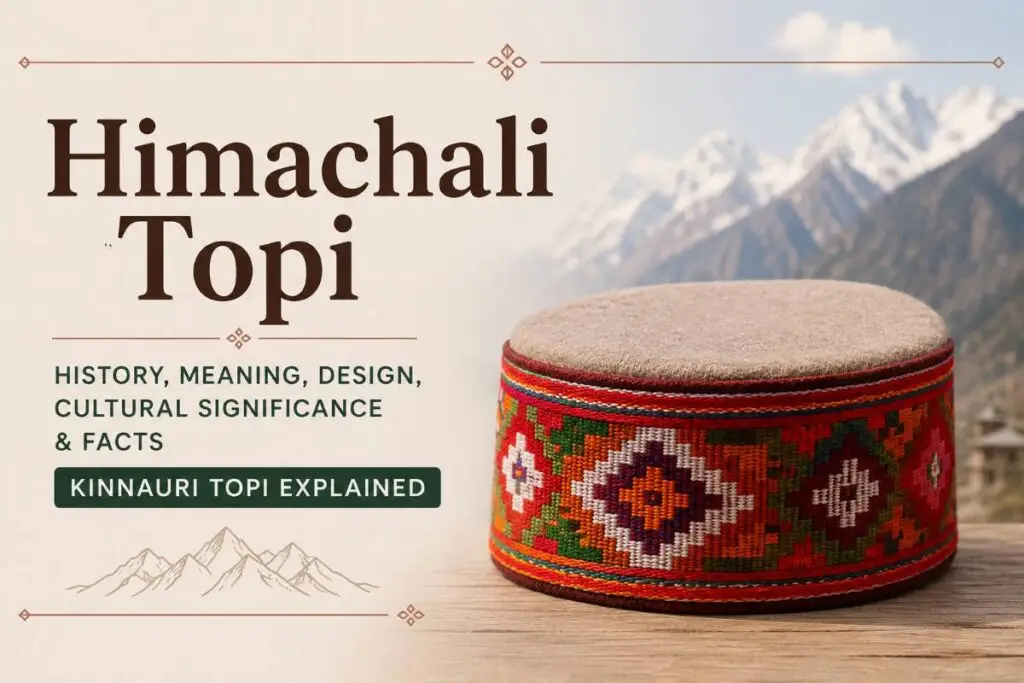
Himachali Topi – History, Meaning, Design, Cultural Significance & Facts
Whenever the identity of Himachal Pradesh is presented in front of an outsider, the first thing that comes to people’s mind is the traditional attire here and an important part of that attire is the Kinnauri Topi, which is called “Thepang” in the local language.
This cap is not just something made to wear on the head, but it reflects that lifestyle of Himachal, especially the Kinnaur region, which has developed over centuries among the mountains.
This cap is a symbol of that cold weather, difficult life, connection with nature, and cultural depth, which is not easy to fully explain in words.
Even though today this cap has become a part of fashion and identity, the story behind it is very old and very interesting.
What is Himachali Topi? (Understanding Kinnauri Topi / Thepang of Himachal Pradesh)
Kinnauri Topi, which is called “Thepang”, is a traditional cap worn in Kinnaur and nearby areas of Himachal Pradesh.
If you see it for the first time, it may look like a simple cap, but as soon as you look at it carefully, you realize that every single thing in it has been made thoughtfully whether it is its shape, color, or the small elements attached to it.
The biggest identity of this cap is its front part, which is made of velvet.
This velvet strip is what makes it different from other Himachali caps.
Earlier this cap was just a useful item to protect from cold.
But slowly it became an identity, a symbol which itself tells that this person is connected to Kinnaur or a mountainous region.
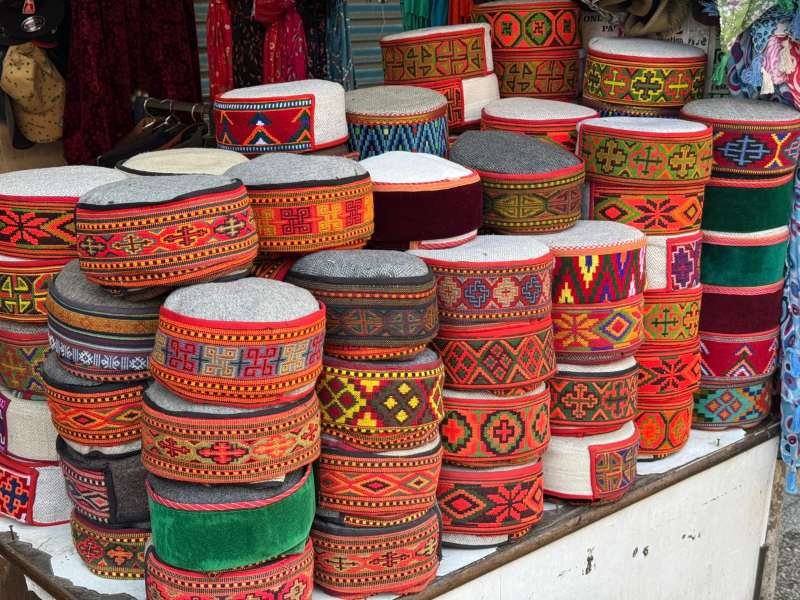
Origin of Kinnauri Topi – Traditional Roots of Himachal
If we try to understand the origin of Kinnauri Topi, then we have to understand the life of mountains.
Life in mountains has never been easy cold, snowfall, difficult paths and limited resources. In such a situation, people shaped their clothes and attire in such a way that it is useful and durable for them.
Kinnauri Topi is also a result of that thinking.
This cap made from sheep wool helped in retaining heat and protected the head from cold.
But with time, it was not only about utility, but beauty and identity were also added into it.
People started adding designs, used colors and gradually it became a cultural symbol.
Colors of Himachali Topi – Green vs Red Meaning Explained
The most eye-catching thing in Kinnauri Topi is its color especially the velvet strip.
Traditionally, green color was used in Kinnaur’s cap.
This green color is considered a symbol of nature, mountains and greenery.
But with time, red color was also added.
Today, people have started seeing these colors politically where green is linked with Congress and red with BJP.
But if you talk about history, this is not completely correct.
Actually, red detailing was added later, while the original identity was the green cap.
Some people also believe that:
Upper Kinnaur mostly wears green caps
In lower areas, red color is also seen
But this is not a fixed rule it is just a general observation.
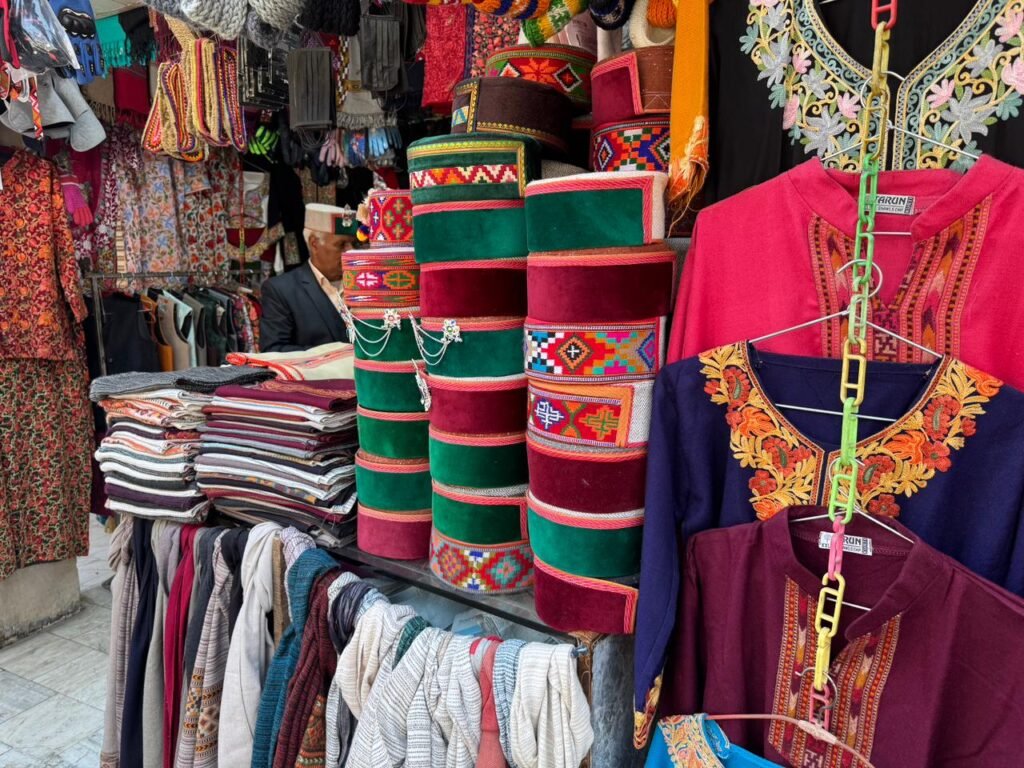
Design and Structure of Himachali Topi (Kinnauri Topi Design Explained)
The structure of Kinnauri Topi may look simple, but it is equally complex and labor-intensive.
This cap is made from sheep wool, which makes it not only strong but also very warm.
In cold areas, it becomes a necessary item.
Apart from this, the white embroidery done on the cap enhances its beauty even more.
If you observe carefully, you will definitely find slight differences in every cap because it is not made by machines, but by hand.
The most interesting thing is that the pattern on the top of the cap changes according to the region.
The top design of Bushahr region cap and Kinnaur cap is different, especially the red strip, due to which both can be easily identified.
Flowers and Sacred Elements in Kinnauri Topi
If you have ever seen Kinnauri Topi carefully, you must have noticed the white “flowers” attached to it.
But the reality is that these are not flowers, but seeds and this is where the most interesting story of this cap begins.
Khuar / Chamkha Seeds (White Sacred Seeds)
These are white, feathery seeds, which are called “Khuar” or “Chamkha” in Kinnaur.
In Sirmaur, they are called “Tatpatanga” and in Solan they are called “Tat Maranga”.
These come from a special plant whose pods are sword-like long about 60 to 90 centimeters.
When these pods ripen and burst, soft, white and light seeds come out from inside them.
These seeds are collected, dried and then attached to the cap.
Here is another interesting thing—
These seeds are not found in the entire Kinnaur
In earlier times, Gaddi people, who used to move from one place to another for grazing sheep, used to collect these seeds from lower areas in winters and carry them along.
These are not used only for decoration, but are considered a symbol of purity and auspiciousness.
It is believed that until these seeds are not attached to the cap, the cap is not considered complete.
Bakri Kaan (Arlu Tree Seeds)
Another special element used in the cap is “Bakri Kaan”.
It looks like a flower, but actually it is a seed from a tree called “Arlu”.
These seeds are colored with natural colors like green, red and yellow.
They are not only used in caps, but also in religious activities, and many times they are even offered in temples.
Wool Pom-Pom Decorations
Apart from these, small pom-poms made of colored wool are also attached to the cap.
These are mainly decorative, but give a different attraction to the cap.
When all these things are combined, a small bunch is prepared, which is attached to the cap with a pin.
Traditional Making Process of Kinnauri Topi
If seen from outside, Kinnauri Topi may look like a simple traditional item, but when you understand its making process, you realize the real effort and art behind it.
Machines have very little contribution in making this cap, and human hands have more contribution.
First, sheep wool is cleaned, then it is converted into thread. This work may look easy, but in reality it requires a lot of time and patience.
After this, the weaving process starts, in which the base of the cap is prepared.
This weaving is done by women of Kinnaur with their hands and this is why every cap has slight differences.
One very interesting thing is that the thread used in it is not ordinary.
In many places, wheat straw is also used in it, which gives strength to the thread.
👉 That means this is not just a wool cap, but it includes farming, animal husbandry and hard work all three.
When the base is ready, then a velvet strip is attached to it.
After that embroidery, design and finally the bunch of flowers (seeds) is attached.
The whole process takes a lot of time and that is why the price of original Kinnauri Topi is according to its effort.
Price of Himachali Topi in Himachal Pradesh (Kinnauri Topi Pricing)
The price of Kinnauri Topi is not fixed it completely depends on its quality, craftsmanship and materials used.
If you see in local markets, a normal cap can be found around ₹450–₹500.
But as you move towards better quality, finer work and original material, its price reaches ₹1000–₹1500.
Some special designs and handmade caps can cost ₹2000 or even more.
One thing to understand here—
This is not just the price of a cap, but the price of that artisan’s effort, time and tradition.
How to Wear Kinnauri Topi Properly (Traditional Style)
There is a special way of wearing Kinnauri Topi, which makes it even more special.
It is not worn straight on the head, but there is a tradition of wearing it slightly tilted.
It is worn in such a way that:
The velvet part is visible on the right side
The left side remains plain
The cap is slightly tilted near the left eyebrow
This style is not just for appearance, but a traditional identity.
In winters, it is also opened and worn in such a way that it can cover the ears which makes it even more useful.
Cultural Significance of Himachali Topi in Himachal Pradesh (Kinnauri Identity)
If Kinnauri Topi is considered just a piece of cloth, then it would be a big injustice to it.
This cap is a part of that culture of Himachal where everything has a meaning
Whether it is clothing, food or festivals.
Everything used in this cap has its own importance:
White seeds → Purity and auspiciousness
Wool → Hard work and life
Colors → Identity and change with time
Hand weaving → Tradition and art
That means this cap is not just beautiful in appearance, but it carries a whole story within itself.
When a person wears this cap, he is not just wearing a garment
He is carrying his identity, his roots and his culture along with him.
Why Himachali Topi is Famous Across India (Including Kinnauri Topi)
Today, Kinnauri Topi is not limited only to Kinnaur or Himachal.
You can see it:
In cultural programs
On political stages
At tourist places
And even in films and social media
Slowly, this cap has become an identity of Himachal which people wear and show with pride.
But along with this, there is also a truth that today in many places its copies are also being made, which do not have the same original craftsmanship and tradition.
Our Responsibility Towards Preserving Himachali Topi Tradition (Kinnauri Heritage)
Now the question is not how beautiful or how famous Kinnauri Topi is
The real question is whether we will be able to pass it to the coming generations in the right form?
Today, a lot is changing people’s choices, clothing and lifestyle.
In such a situation, traditional things are slowly being left behind.
If we really want to preserve this tradition, then we have to:
Support local artisans
Buy original products
And understand and carry forward this culture
Because if we do not pay attention today, then it is possible that in the future this cap may be limited only to photos and museums.
Tell Us Your Opinion – Stay Connected With Us
How did you like this blog? Share your thoughts in the comments below.
For more unique and hidden facts, don’t forget to explore more on KKSBVLOGS.COM
And for detailed videos, follow @official_kksb on Instagram and subscribe to KKSB VLOGS on YouTube.
FAQs About Kinnauri Topi
Why is Kinnauri topi important?
It is a symbol of the cultural identity of Himachal Pradesh and reflects the traditions, faith and lifestyle of the Kinnaur region.
What is Kinnauri topi made of?
It is mainly made from sheep wool, handmade threads and natural elements like seeds and colors.
What do the colors of Kinnauri topi mean?
Green color is the traditional and original identity, while red color was added later. Today some people also link it politically.
Why are seeds used in Kinnauri topi?
The white seeds attached to the cap are considered a symbol of purity, auspiciousness and identity.
Is Kinnauri topi handmade?
Yes, original Kinnauri Topi is handmade and it requires a lot of time and effort.