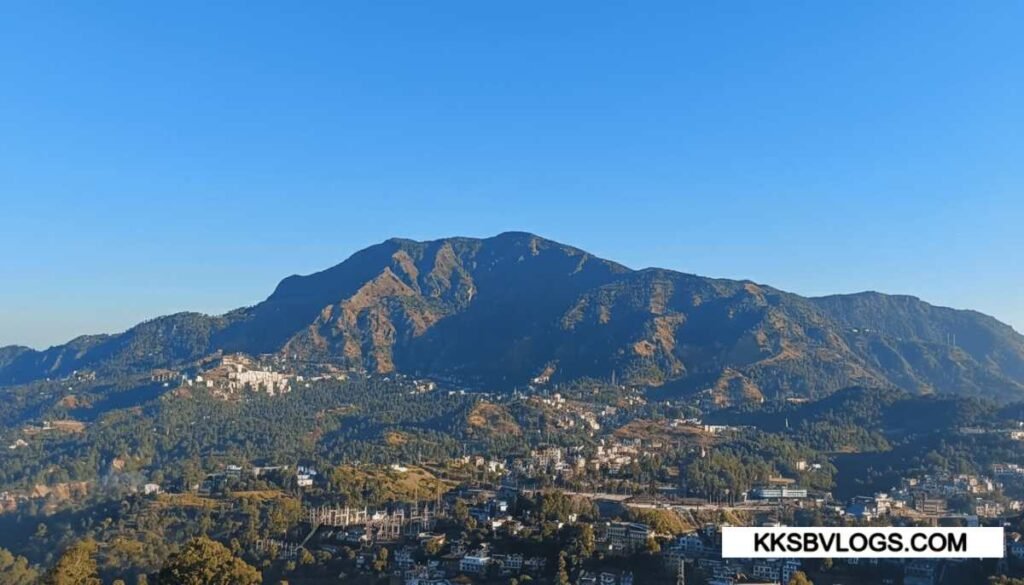
Himachal Pradesh’s identity is not limited only to its valleys, dev culture, and traditions. The real identity of this mountain is also hidden in its language and script—and one of them is Takri Script, which has now almost disappeared.
There was a time when this script was the backbone of the administrative, religious, and cultural system of Himachal’s princely states. But today the situation is such that very few people are left who can read and understand it.
This is not just the loss of a script, but the gradual erasure of an entire history, knowledge, and identity.
What is Takri Script? (Understanding Himachal’s Ancient Writing System)
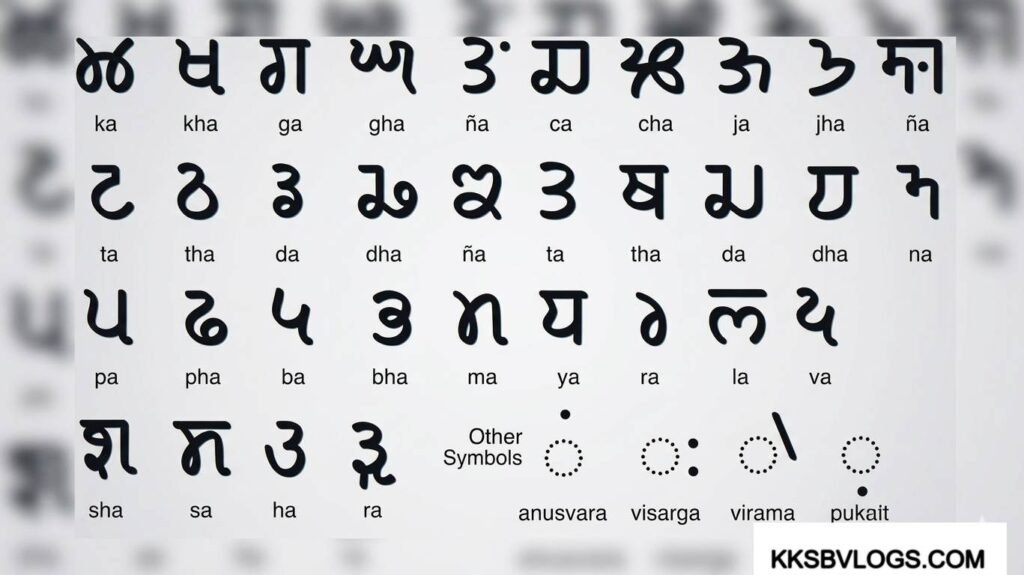
Takri Script is an ancient Indian script, which was mainly used in Himachal Pradesh and its surrounding hilly regions.
It was not just a medium of writing, but the entire record of the society of that time was preserved through it.
To understand in simple words—
👉 Just like today we use Devanagari script for Hindi,
in the same way earlier the people of Himachal used Takri Script to write their local languages and dialects.
This script was used with slight variations in different regions, so it did not have one fixed form. Still, its basic structure and identity remained the same.
Origin of Takri Script – Connection with Sharda Script
To understand the origin of Takri Script, we have to go towards an even older script—Sharda Script.
It is believed that Takri developed from Sharda Script as a simpler and more practical form.
Sharda Script was mainly used in Kashmir and some parts of North India, but over time when this script started becoming difficult for common people, a simpler form was developed—which we know today as Takri.
👉 That means you can call Takri a “people-friendly version”,
which was more convenient for both common people and administration.
Regions Where Takri Script Was Used in Himachal Pradesh
Takri Script was used in many princely states and regions of Himachal Pradesh.
It was not limited to one place, but was spread across the entire hilly region.
Mainly this script was prevalent in these regions:
- Chamba
- Mandi
- Kullu
- Sirmaur
- Kangra
- Mahasu region
In every region, it developed its own local identity, due to which different forms of it are seen.
Chamba Takri (Chambyali Variation)
The Takri used in the Chamba region was called Chambyali Takri.
According to the local dialect and pronunciation here, some changes were seen in this script.
This script has been widely used in the temples, inscriptions, and royal documents of Chamba, due to which it proves to be very important in understanding the history of this region.
Mandi Takri (Mandli Variation)
The form of Takri used in the Mandi region was called Mandli Takri.
Administrative records, land-related documents, and business accounts were written in this script.
During the time of the Mandi princely state, this script was an important part of the governance system.
Kullu Takri (Kullvi Variation)
The Takri used in the Kullu region was called Kullvi Takri.
This script was used to preserve local culture, religious traditions, and folk life in written form.
Many old documents and temple records of Kullu are still found in this script.
How Takri Script Was Used in Daily Life and Administration
Takri Script was not just a cultural symbol, but it was an important part of daily life and administrative work.
It was used in almost every important work of that time.
Government Records and Land Documents
During the time of kings and rulers, government records and land-related documents were written in Takri Script.
Land division, tax system, and administrative orders—everything was recorded in this script.
Temple Inscriptions and Religious Texts
Many inscriptions and religious texts found in the temples of Himachal are written in Takri Script.
This script was also deeply connected with religion and faith.
Trade, Accounts and Traditional Knowledge
Business transactions, accounts, and traditional knowledge—like Ayurveda, astrology, and tantric texts—were also written in Takri Script.
From this, it becomes clear that this script was not limited to just one field, but it was used in every part of society.
Role of Takri Script in Himachali Culture and Education
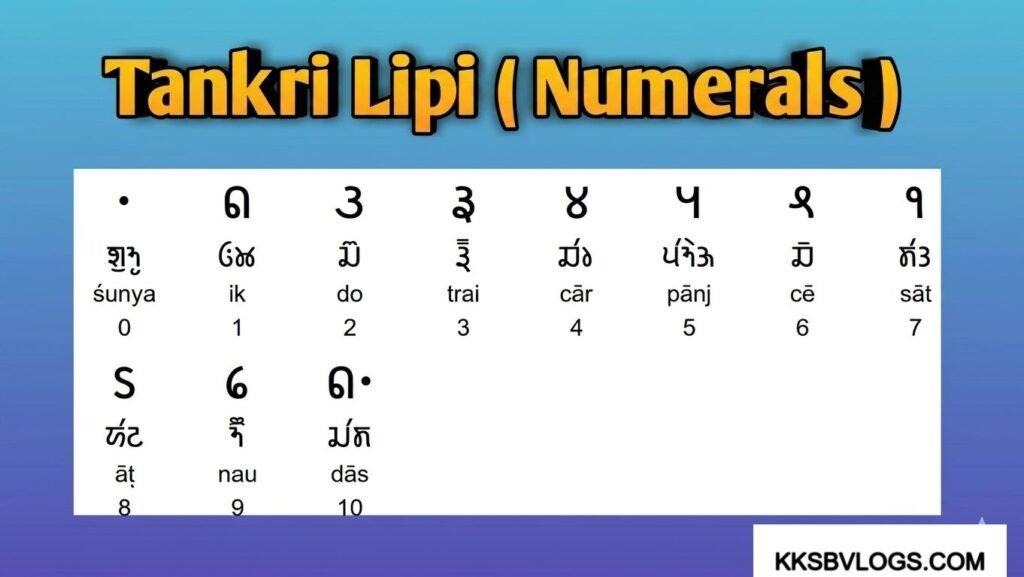
There was a time when Takri Script was a part of Himachal’s education system.
It was taught in schools and gurukuls, due to which people of every class could understand and use it.
This script was not just a medium of knowledge, but it was also an important way to carry forward Himachali culture, traditions, and lifestyle.
If the language and script of a society remain alive, then its history and identity also remain alive—and this is the role Takri was निभा रही थी.
Why Did Takri Script Disappear? (Real Reasons Explained)
Over time, the use of Takri Script decreased and gradually it almost disappeared.
There were many major reasons behind this, which are important to understand.
Impact of British Rule
During British rule, changes came in the administrative system.
New languages and scripts were promoted, due to which the use of Takri gradually started decreasing.
Introduction of Devanagari as Standard Script
After 1948, when Devanagari script was adopted as the standard form, Takri was completely sidelined.
It stopped being taught in schools and its use ended in government work.
Lack of Printing and Digital Support
Neither printing facilities were developed for Takri Script nor was it properly included in digital systems later.
Because of this, it became even more difficult for the new generation to learn and use it.
Current Status of Takri Script – Is It Really Extinct?
In today’s time, Takri Script has almost become extinct, but it cannot be called completely finished.
It still exists in many temples, old documents, and records of Himachal.
The problem is that now very few people are able to read it.
This means that even though a large part of our history is in front of us, we are not able to understand it.
Efforts to Revive Takri Script in Himachal Pradesh
In recent years, efforts have started to revive Takri Script again.
Although these efforts are still limited, a ray of hope is definitely visible.
A 7-day virtual workshop was organized in Salooni College of Chamba, in which students and people were taught about this script and made aware.
Such programs are helping people connect with their cultural heritage.
Apart from this, some researchers—like Yatin Pandit—are continuously working in this direction.
They are not only teaching Takri Script to people, but are also doing work like developing its fonts and translating old documents.
👉 These efforts are small, but if they get the right direction and support, then Takri Script can be revived again.
Government and Institutional Initiatives
To save Takri Script, some efforts have now started even at the institutional level. Although these efforts are not yet on a large scale, they can definitely be considered a beginning.
Recently, a 7-day virtual workshop was organized in Salooni College of Chamba, whose objective was to make students and common people aware about Takri Script.
In this workshop, experts not only explained the history of this script, but also tried to teach it practically—like through online classes, study material, and assignments.
Such initiatives show that if efforts are made in the right direction, then this script can be brought back to people again.
But the truth is that these efforts are still limited and need to be taken to a larger level—only then its real impact will be seen.
Contribution of Researchers Like Yatin Pandit
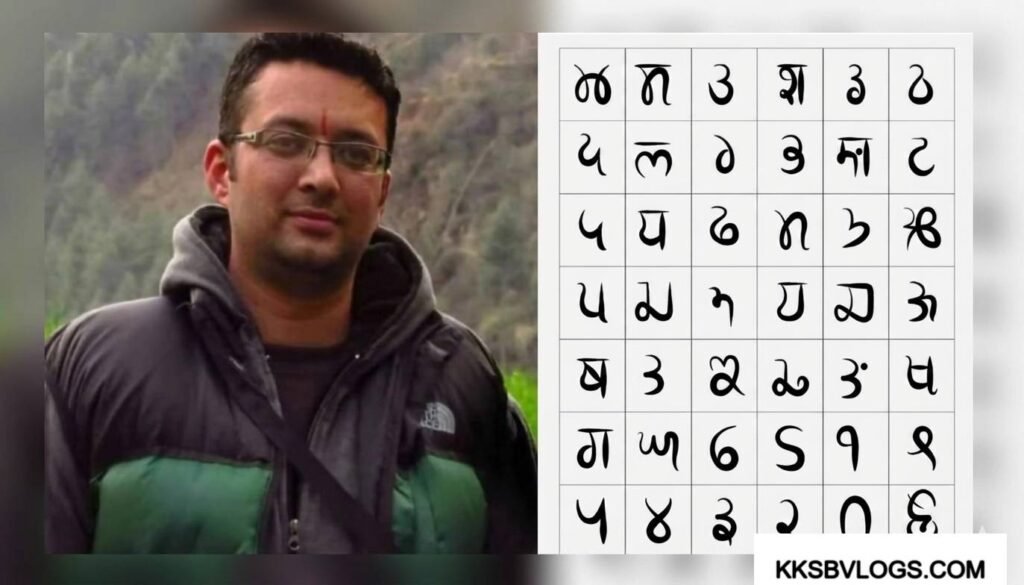
To save anything, not only the government but also some passionate people are needed—and in the case of Takri Script, one such name comes forward, Yatin Pandit.
Yatin has been continuously working for the past few years to save this script. Through workshops and online seminars, he has taught and made aware about Takri Script to around 800 people in India and abroad.
But his work is not limited to just teaching.
He is trying to revive this script practically—like creating fonts for it, doing research, and translating old temple records and documents.
He believes that a lot of real history of Himachal is written in Takri Script. If this script gets lost, then understanding that history will also become almost impossible.
That is why people like him are like a hope for this script today.
Unicode, Fonts and Digital Revival of Takri Script
In today’s time, for any language or script to stay alive, it is very important for it to exist in digital form.
The biggest problem with Takri Script has been that it could not connect itself with technology over time.
But now gradually work is also being done in this direction.
Efforts are being made to include Takri Script in Unicode and to develop its fonts, so that it can be used on computers and mobile.
Although this process is still at an initial level, but if it becomes successful, then it can prove to be a big step for the revival of Takri Script.
Because today’s generation learns only what exists in the digital world.
Why Saving Takri Script is Important for Himachal’s Identity
The identity of any society is not only from its traditions, but also from its language and script.
Takri Script has been an important part of that identity of Himachal.
Today we try to preserve dev culture, folk dance, and traditional dress, but we are forgetting the script in which all this was recorded.
If the script disappears, then the coming generations will depend only on hearsay—because there will be no one to read the real records.
👉 That means this is not just a script, but a part connected to our roots, which is important to save.
Challenges in Reviving Takri Script in Modern Time
Reviving Takri Script again is not an easy task. There are many challenges in front of it:
- Lack of awareness in the new generation
- No place in the education system
- Limited use on digital platforms
- Lack of sufficient resources for learning
Apart from this, in today’s time people want to learn only those things which have direct use in their career or daily life.
In such a situation, making an old script popular again becomes a big challenge.
Can Takri Script Be Brought Back in Daily Life?
This is a question whose answer is not easy.
Can Takri Script be brought back into daily life again?
Maybe not completely… but partially, yes.
If it is:
- Taught as an optional subject in schools
- Included in cultural programs
- Made available on digital platforms
then gradually people will start knowing and learning it.
👉 To bring anything back, it is necessary to make it a part of people’s lives—keeping it only in books does not work.
Our Responsibility Towards Himachal’s Lost Script
In the end, the question is whether we will just be satisfied by saying that “this was our old script”?
Or will we make some efforts to save it?
Being Himachali is not limited only to wearing a cap or celebrating festivals.
It is also the responsibility to understand and carry forward our language, our script, and our identity.
If today we do nothing in this direction, then the coming generations may hold us responsible—
that we lost an important part of our own identity.
Tell Us Your Opinion – Stay Connected With Us
How did you like this blog? Share your thoughts in the comments below.
For more unique and hidden facts, don’t forget to explore more on KKSBVLOGS.COM
And for detailed videos, follow @official_kksb on Instagram and subscribe to KKSB VLOGS on YouTube.
FAQs About Takri Script
Is Takri script still used today?
In today’s time, the use of Takri Script has become very limited. It is mainly restricted to old documents, temple records, and some research work. However, some people and institutions are trying to revive it again.
Who invented Takri script?
There is no single definite inventor of Takri Script. It is a script that developed over time, which came out of Sharda Script in a simpler and more practical form.
Is Takri script similar to Devanagari?
Both Takri and Devanagari are Indian scripts, but their structure and writing style are different. Takri was more in regional and traditional use, while Devanagari was later adopted as a standard script.
Where can I learn Takri script?
Today, to learn Takri Script, some online workshops, research institutions, and individual efforts are available. Some researchers and institutions are also using digital platforms to teach it.
Why did Takri script decline?
The main reasons for the decline of Takri Script include the impact of British rule, standardization of Devanagari script, and its inability to adapt with technological development. Gradually its use kept decreasing and it almost disappeared.